
What's Happening?
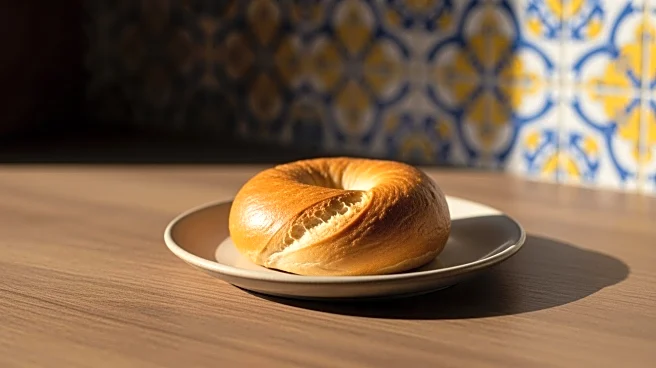
Tamara Cohen, a descendant of Sephardic Jews expelled from Spain during the 1492 Inquisition, has opened a bagel shop in Madrid called Mazál. Cohen, originally from Philadelphia, moved to Spain after obtaining
citizenship through a law granting it to descendants of Sephardic Jews. Since opening in 2020, Mazál has introduced Jewish culinary traditions to the local community, offering bagels and challah. The shop has become a cultural hub for both Jewish and non-Jewish patrons, reflecting a resurgence of Jewish life in Spain. Cohen's initiative is part of a broader trend of Sephardic history resurfacing in Spain, with recent discoveries of historical Jewish sites.
Why It's Important?
Cohen's bagel shop represents a cultural and historical revival for the Jewish community in Spain, a country with a complex history of Jewish expulsion and return. The shop not only serves as a business but also as a symbol of the enduring legacy and resilience of Sephardic Jews. It highlights the impact of Spain's Sephardic ancestry law, which has allowed thousands to reconnect with their heritage. The shop's success also underscores the growing interest in Jewish culture and cuisine in Spain, contributing to a more diverse and inclusive society. This development may encourage further exploration and preservation of Jewish history in the region.
Beyond the Headlines
The opening of Mazál also sheds light on the challenges faced by the Jewish community in Spain, particularly in the context of rising antisemitism and political tensions related to Israel. Cohen's experience reflects the delicate balance of maintaining cultural identity while navigating complex social and political landscapes. The shop's existence is a testament to the resilience of Jewish culture and its ability to adapt and thrive in new environments. It also raises questions about the role of food in cultural preservation and the ways in which culinary traditions can bridge cultural divides.