



What's Happening?
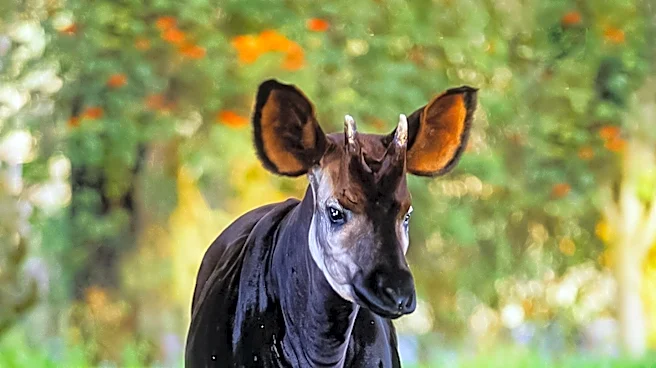
The San Antonio Zoo is mourning the death of Epulu, a male okapi who was instrumental in conservation efforts for his endangered species. Zoo officials reported that Epulu's care team observed signs of colic and a loss of appetite last week. Despite receiving
treatment, his condition deteriorated. Epulu arrived at the San Antonio Zoo in 2014 and played a vital role in raising awareness and supporting the conservation of okapi, a rare forest-dwelling species native to Central Africa. In 2023, Epulu and his mate welcomed a calf named Gates, who has since been moved to the Los Angeles Zoo as part of a coordinated breeding program. The San Antonio Zoo is currently collaborating with the Association of Zoos and Aquariums to determine the next steps for their conservation program following Epulu's passing.
Why It's Important?
The passing of Epulu represents a significant loss for the San Antonio Zoo and the broader conservation community. Okapis are an endangered species, and individuals like Epulu, who participate in breeding programs, are crucial for maintaining genetic diversity and ensuring the species' survival. His role in raising awareness about the plight of okapis in Central Africa highlights the importance of zoos in educating the public and garnering support for global conservation initiatives. The coordinated breeding program, which saw his calf Gates transferred to the Los Angeles Zoo, underscores the collaborative efforts among zoos to manage and protect endangered populations. This event emphasizes the fragility of endangered species and the continuous challenges faced by conservationists in their efforts to prevent extinction.
What's Next?
The San Antonio Zoo will continue to work with the Association of Zoos and Aquariums to plan the future of their okapi conservation program. This collaboration will likely involve assessing the remaining okapi population within accredited zoos, evaluating breeding recommendations, and potentially identifying new individuals to contribute to the genetic diversity of the captive population. The focus will remain on ensuring the long-term viability of the okapi species through carefully managed breeding and conservation strategies. The zoo will also likely continue its public education efforts to raise awareness about okapi conservation and the broader challenges facing endangered species globally.
Beyond the Headlines
Epulu's death brings to light the complex ethical considerations involved in managing endangered species in captivity. While zoos play a critical role in conservation through breeding programs and public education, the loss of an individual animal, particularly one vital to such efforts, underscores the inherent challenges and responsibilities. It also highlights the ongoing struggle against habitat loss and other threats that push species like the okapi to the brink of extinction in their natural environments. The coordinated breeding programs among zoos are a testament to the scientific and collaborative approaches required to safeguard biodiversity, but they also serve as a poignant reminder of the continuous need for greater global commitment to protecting natural habitats and wildlife.