









What's Happening?
Las Vegas, New Mexico, has introduced a self-guided Historic Home Trail, offering residents and visitors an opportunity to explore the city's rich architectural and historical landscape. This walking tour guides participants through one of the Southwest's
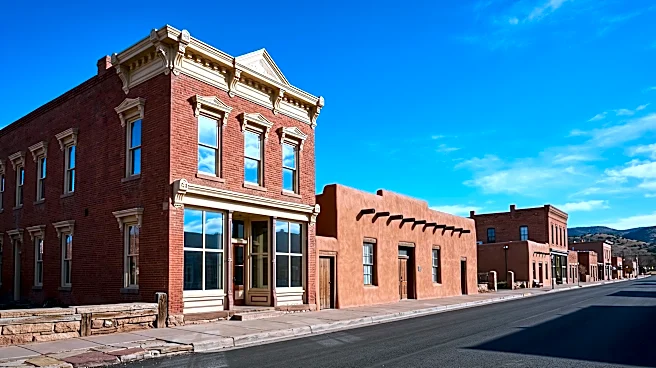
most distinctive architectural destinations, showcasing a blend of adobe traditions, Victorian ambition, railroad-era prosperity, and modern design. The trail highlights the Las Vegas Plaza, Bridge Street, historic neighborhoods, architectural landmarks, and locations used in films. With over 900 registered historic structures, Las Vegas, New Mexico, is recognized as a significant destination for historic architecture. The self-guided format allows individuals to explore at their own pace, focusing on specific districts or combining several sections. The tour provides insights into the city's past, including its role as the largest city on the Santa Fe Trail and a gateway to the American West, where Indigenous, Hispanic, European, and American histories converged.
Why It's Important?
This initiative is important for several reasons. Firstly, it enhances cultural tourism in Las Vegas, New Mexico, by providing an accessible and engaging way for people to connect with the city's unique heritage. This can lead to increased visitor numbers, supporting local businesses and the economy. Secondly, by highlighting the more than 900 historic structures, the tour underscores the city's commitment to preserving its architectural legacy, which ranges from traditional New Mexican adobe to Italianate, Queen Anne, Romanesque, Mission Revival, and International Style buildings. This preservation effort helps maintain the city's distinct character and provides educational value about the region's development. Lastly, the self-guided nature of the tour promotes independent exploration, catering to a diverse range of visitors who prefer flexibility in their travel experiences, thereby broadening the appeal of Las Vegas, New Mexico, as a heritage tourism destination.
What's Next?
The Historic Home Trail is designed as an ongoing attraction, allowing visitors to engage with the city's history at their leisure. Future developments could include the integration of digital enhancements, such as mobile applications with audio guides or augmented reality features, to further enrich the self-guided experience. The city may also consider expanding the trail to include more of its extensive collection of historic structures or developing themed variations focusing on specific architectural styles or historical periods. Local businesses, particularly those in the hospitality and retail sectors, are likely to leverage the tour to attract more customers, potentially offering promotions or partnerships related to the Historic Home Trail. Community organizations might also organize guided events or educational programs in conjunction with the trail to foster deeper engagement with the city's past.
Beyond the Headlines
Beyond its immediate appeal as a tourist attraction, the Historic Home Trail in Las Vegas, New Mexico, serves as a powerful tool for civic identity and community pride. By showcasing the convergence of diverse histories—Indigenous, Hispanic, European, and American—the trail tells a comprehensive story of the Southwest's cultural tapestry. This narrative can foster a greater understanding of the complex forces that shaped the region, promoting a sense of shared heritage among residents. Furthermore, the emphasis on architectural preservation highlights the economic and cultural value of historic buildings, encouraging ongoing investment in their maintenance and adaptive reuse. This approach not only safeguards physical structures but also preserves the intangible stories and memories embedded within them, contributing to a more resilient and culturally rich urban environment.