



What's Happening?
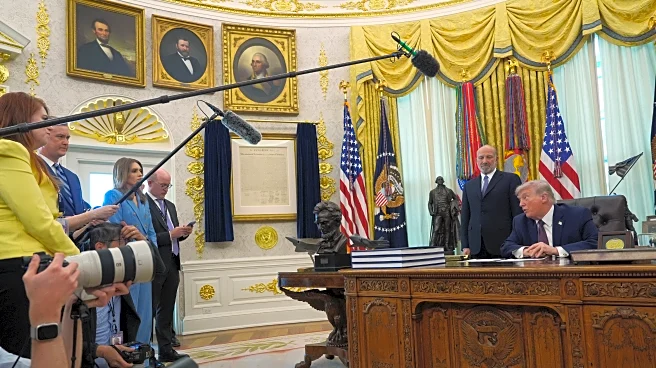
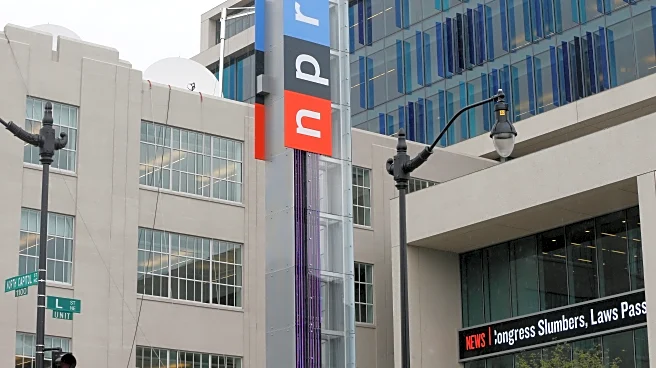
A federal judge has blocked President Trump's executive order that aimed to cut federal funding for NPR and PBS, ruling it unconstitutional. The decision, made by U.S. District Judge Randolph Moss, found that the order violated the First Amendment by engaging
in viewpoint discrimination. The executive order, which accused the media outlets of bias, was challenged in court, leading to this ruling. Despite the legal victory, the public broadcasting system has already faced significant setbacks, as Congress had previously voted to cut federal funding, resulting in the closure of the Corporation for Public Broadcasting.
Why It's Important?
This ruling is a significant affirmation of press freedom and the First Amendment, highlighting the judiciary's role in checking executive power. The decision underscores the importance of protecting media entities from government retaliation based on their content. While the ruling is a victory for NPR and PBS, the broader implications for public media funding remain uncertain, as Congress had already moved to defund these organizations. This case illustrates the ongoing tension between the Trump administration and media outlets, reflecting broader debates about media bias and government funding.
What's Next?
The Trump administration is expected to appeal the ruling, as indicated by White House spokesperson Abigail Jackson. The appeal process could further delay any resolution, leaving the future of federal funding for public media in limbo. Meanwhile, NPR and PBS will continue to seek alternative funding sources to sustain their operations. The case may also influence future legislative and executive actions regarding media funding and regulation, potentially setting precedents for how government interacts with media organizations.