




What's Happening?
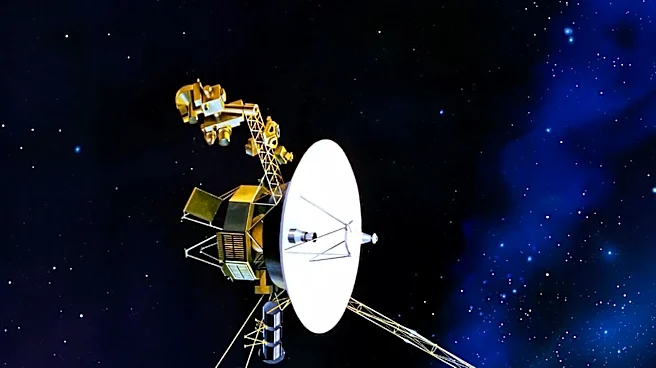
NASA engineers have successfully extended the operational life of the Voyager 2 spacecraft by implementing innovative power management techniques. The spacecraft, which has been in operation for nearly half a century, relies on radioisotope thermoelectric
generators for power. As the plutonium supply depletes, the team at NASA's Jet Propulsion Laboratory has devised a strategy to conserve energy by turning off non-essential systems and substituting them with lower-power alternatives. This approach, known as the 'Big Bang,' allows Voyager 2 to continue operating three science instruments in interstellar space for an additional year.
Why It's Important?
The extension of Voyager 2's mission is a testament to the ingenuity and resourcefulness of NASA engineers. It highlights the importance of maximizing the lifespan of space missions, especially those that provide valuable scientific data from interstellar space. The continued operation of Voyager 2 allows scientists to gather more information about the outer reaches of our solar system, contributing to our understanding of space and the universe. This achievement underscores the significance of long-term planning and adaptability in space exploration, setting a precedent for future missions.
What's Next?
NASA plans to apply similar power management techniques to Voyager 1, which is farther from Earth than Voyager 2. The mission team will continue to monitor the spacecraft's performance and make adjustments as needed to ensure the longevity of the mission. The data collected by the Voyager spacecraft will continue to be analyzed by scientists, providing insights into the conditions of interstellar space. The success of this power management strategy may influence the design and operation of future deep-space missions.