




What's Happening?
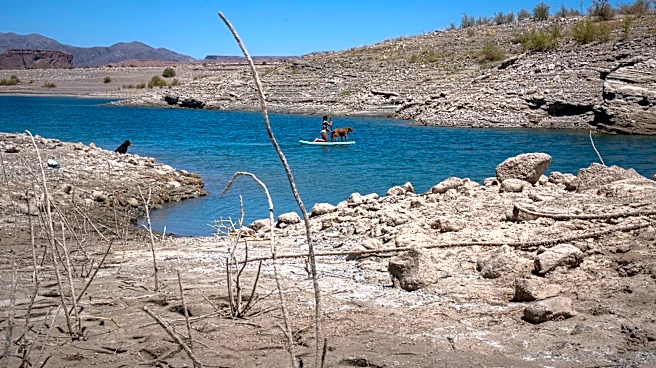
The U.S. government has announced a new proposal to manage the Colorado River, which is experiencing severe drought conditions. This plan involves significant water supply cuts for the Lower Basin states of Arizona, California, and Nevada. The proposal,
released by the U.S. Bureau of Reclamation, aims to address the ongoing water shortages by setting limits on the river's operation and adjusting annual water releases from Lake Powell. The plan suggests annual releases between 5 and 12 million acre-feet, a change from the previous average of 7.5 million acre-feet. The proposal also anticipates water shortages of up to 3 million acre-feet per year for the Lower Basin states. This intervention comes after the seven basin states failed to reach a consensus on water sharing, despite over three years of negotiations.
Why It's Important?
The proposed water cuts are crucial as they directly impact the water supply for one in ten Americans and the agricultural sector, which relies heavily on the Colorado River. The river is a vital resource, supporting 15% of U.S. food production and generating power for six million people. The proposed cuts could lead to significant economic and social challenges, particularly for Arizona, which has expressed concerns about the potential impact on its water users and economy. The plan's implementation could also lead to legal challenges from the affected states, further complicating the situation. The proposal highlights the urgent need for sustainable water management solutions in the face of prolonged drought conditions.
What's Next?
The proposal is set to be in effect through 2036, providing a framework for managing the river's resources amid changing hydrologic conditions. The affected states may pursue legal action to challenge the federal intervention, which could prolong uncertainty regarding water allocation. Additionally, the federal government is expected to release guidelines for 2027 and 2028, which may further influence water management strategies. Stakeholders, including state governments and agricultural sectors, will need to adapt to the new water allocation framework and explore alternative water conservation measures.