


What's Happening?
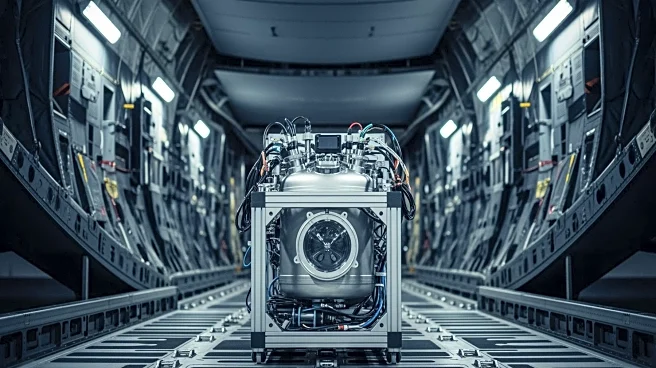
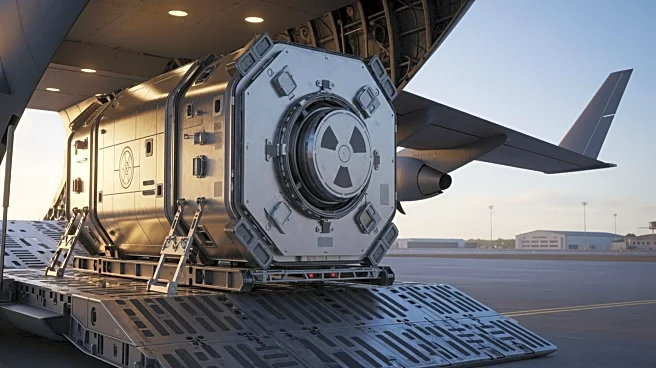
The U.S. military, in collaboration with the Department of Energy, has successfully airlifted a small nuclear reactor from California to Utah. This operation marks a significant step in the Trump administration's initiative to rapidly deploy nuclear power
for both military and civilian applications. The reactor, a 5-megawatt microreactor, was transported without nuclear fuel on a C-17 military aircraft. Energy Secretary Chris Wright and Undersecretary of Defense Michael Duffey accompanied the reactor, emphasizing the administration's commitment to fast-tracking commercial licensing for such reactors. This move is part of a broader strategy to reshape the U.S. energy landscape, with President Trump advocating for nuclear power as a reliable, carbon-free energy source. Despite skepticism regarding the safety and feasibility of microreactors, the administration is pushing forward with plans to have these reactors operational by July 4.
Why It's Important?
The deployment of microreactors represents a potential shift in the U.S. energy strategy, emphasizing nuclear power as a key component in meeting the growing energy demands of modern technology and military operations. This initiative could enhance energy security, particularly for military bases, by providing a resilient power source independent of the civilian grid. However, the push for nuclear power also raises concerns about safety, economic viability, and environmental impact, particularly regarding nuclear waste disposal. The administration's efforts to expedite the deployment of microreactors could have significant implications for the energy industry, potentially leading to increased investment and innovation in nuclear technology. Conversely, it may also face opposition from environmental groups and safety advocates who question the long-term sustainability and safety of nuclear energy.
What's Next?
The microreactor transported to Utah will undergo testing and evaluation at the Utah San Rafael Energy Lab. The Energy Department is in discussions with various states to establish sites for reprocessing fuel or handling nuclear waste disposal. The administration aims to have the reactor reach 'criticality' by July 4, aligning with President Trump's timeline for operational deployment. As the project progresses, it will be crucial to address safety concerns and establish clear protocols for the secure transport and operation of nuclear reactors. The outcome of these efforts could influence future energy policies and the role of nuclear power in the U.S. energy mix.
Beyond the Headlines
The rapid deployment of nuclear power, as advocated by the Trump administration, could signal a broader shift towards embracing nuclear energy as a cornerstone of U.S. energy policy. This move may challenge existing regulatory frameworks and necessitate new safety standards and protocols. Additionally, the focus on nuclear power could impact the development of renewable energy sources, potentially altering the balance of energy investments. The ethical and environmental implications of increased nuclear energy use, particularly concerning waste management and safety, will likely be subjects of ongoing debate and scrutiny.