



What's Happening?
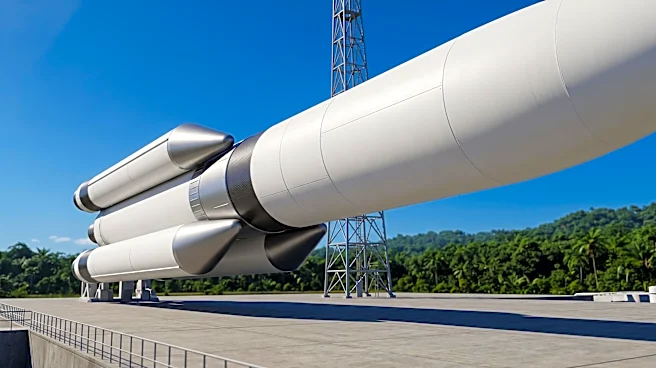
The Ariane 6 launch schedule has been delayed following the discovery of an engine turbopump anomaly during ground evaluations in August. This issue, initially reported by La Tribune and later specified by Space Intel Report, has led to a reduction in the anticipated
number of Ariane 6 launches for the current year. Previously, three or four launches were expected, but this number has now been revised to just one or two. The European Space Agency (ESA) confirmed awareness of the delays but has not disclosed specific details regarding the underlying cause of the anomaly. ArianeGroup and Arianespace also issued a statement acknowledging the need for schedule revisions due to ongoing checks related to the Ariane 6 production line, without providing further specifics about the evaluations or their connection to the turbopump issue. Officials are currently investigating whether the affected turbopump can be repaired on-site in French Guiana or if a replacement is necessary. The turbopump is a critical component, responsible for transferring liquid propellants to the engine's combustion chamber. Each of the rocket's two liquid-fuel engines, the Vulcain 2.1 main-stage engine and the Vinci upper-stage engine, contains two turbopumps: one for liquid oxygen and one for liquid hydrogen. Italian company Avio currently manufactures the liquid oxygen turbopumps, while ArianeGroup produces the hydrogen turbopumps, though a transition for oxygen turbopump production to ArianeGroup France is underway.
Why It's Important?
The delay in the Ariane 6 launch schedule has significant implications for the European space industry and its competitive standing in the global launch market. Ariane 6 is designed to be Europe's primary heavy-lift launch vehicle, crucial for independent access to space for European governments, commercial satellite operators, and scientific missions. Delays can lead to increased costs, potential loss of market share to competitors like SpaceX, and disruptions to planned satellite deployments. The anomaly highlights the complex engineering challenges and stringent safety requirements inherent in rocket development. The reliance on specific manufacturers for critical components, such as Avio for liquid oxygen turbopumps, also underscores the intricate supply chain dynamics within the aerospace sector. Any issues with these components can have cascading effects on the entire program. Furthermore, the lack of specific details regarding the anomaly could raise concerns about transparency and the overall health of the Ariane 6 program, potentially impacting investor confidence and future contracts.
What's Next?
Officials are actively investigating the turbopump anomaly to determine if it can be repaired at the launch site in French Guiana or if a replacement is required. The outcome of this assessment will dictate the revised launch timeline for Ariane 6. ArianeGroup and Arianespace will need to provide a more detailed update on the revised mission schedule for the remainder of the year, which is currently projected to include only one or two launches. The industrial ramp-up of Ariane 6 is reportedly proceeding smoothly, with the goal of reaching a launch rate of 9 to 10 per year by 2027. However, the current anomaly could impact this long-term target if the underlying issue is systemic or requires extensive re-engineering. The transition of oxygen turbopump production from Avio to ArianeGroup France will also continue, and the current issue may influence the pace or scrutiny of this transition. Stakeholders, including the European Space Agency and commercial clients, will be closely monitoring these developments for updates on launch availability and program stability.
Beyond the Headlines
This turbopump anomaly underscores the inherent risks and complexities in advanced aerospace engineering, where a single component failure can halt an entire program. Beyond the immediate financial and scheduling impacts, such delays can erode confidence in European space capabilities, potentially pushing customers towards more reliable or readily available launch services from other nations. The incident also highlights the delicate balance between innovation and reliability in space technology. While the industrial ramp-up aims for a high launch cadence, ensuring the robustness of every component is paramount to avoid catastrophic failures. The ongoing shift in turbopump production responsibilities between Avio and ArianeGroup France adds another layer of complexity, raising questions about potential impacts on quality control and supply chain resilience during such transitions. Ultimately, the resolution of this anomaly will be a critical test for the Ariane 6 program's ability to overcome technical hurdles and maintain its strategic importance for Europe's independent access to space.