
What's Happening?
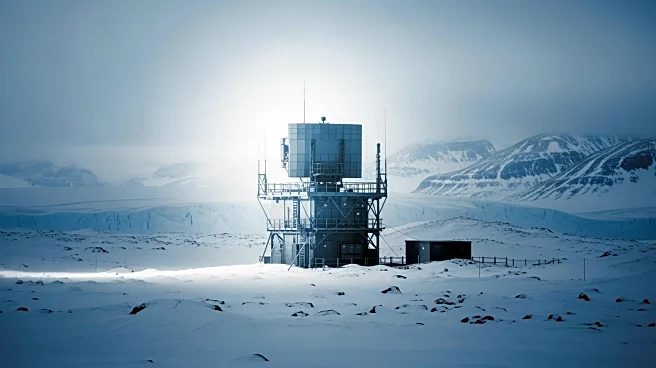
During the Cold War, Greenland served as a significant strategic location for the United States, hosting multiple military facilities and air bases. This presence was established under a 1951 agreement
with Denmark, allowing the U.S. to expand its military footprint on the island. Today, the U.S. maintains a presence at the Pituffik Space Base, formerly known as Thule Air Base, which plays a crucial role in missile detection and tracking. President Trump has expressed intentions to acquire Greenland, citing security concerns over potential Russian and Chinese influence in the region. This has raised alarms among NATO members, as Denmark, a founding member, views such actions as potentially destabilizing to the alliance.
Why It's Important?
Greenland's strategic location in the Arctic makes it a focal point for geopolitical tensions, particularly between the U.S., Russia, and China. The U.S. military's historical and ongoing presence underscores its importance in national security and defense strategies. President Trump's interest in acquiring Greenland highlights the island's value in countering perceived threats from other global powers. This situation also tests the strength and unity of NATO, as Denmark and other European allies navigate the implications of increased U.S. military activity in the Arctic. The potential rejuvenation of Cold War-era bases could significantly enhance U.S. military capabilities in the region, impacting global military dynamics.
What's Next?
European leaders, including those from Denmark, are working to address U.S. security concerns in the Arctic. NATO is considering operations in the region to bolster security and reassure alliance members. As President Trump continues to push for acquiring Greenland, diplomatic efforts will likely intensify to balance U.S. interests with those of Denmark and other NATO allies. The future of U.S. military expansion in Greenland will depend on ongoing negotiations and the broader geopolitical landscape, particularly in relation to Arctic security and international relations.