







What's Happening?
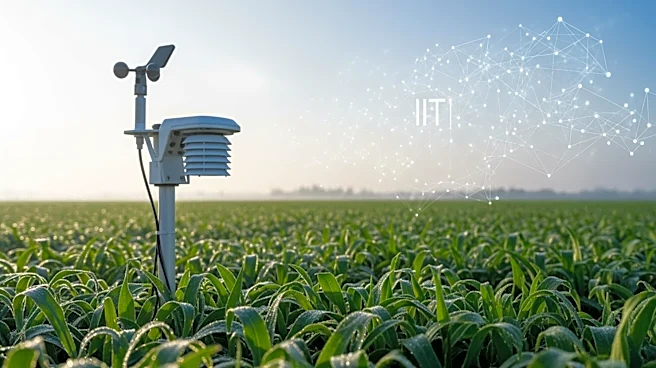
A collaboration between North Carolina State University, East Carolina University, and SAS is deploying IoT sensors to help farmers in Eastern North Carolina combat flooding and soil salinity. The project uses the Ag Analytics Platform to provide real-time
data on water depth, soil moisture, and salinity, helping farmers make informed decisions to protect crops and livestock. This initiative aims to mitigate the impact of extreme weather events, which have caused significant agricultural losses in recent years. The project is part of a broader effort to integrate technology into agriculture to enhance productivity and sustainability.
Why It's Important?
The agricultural sector in North Carolina contributes significantly to the state's economy, but it faces challenges from climate change and extreme weather. By providing farmers with real-time data, the project helps them prepare for and respond to environmental threats, potentially saving millions in crop and equipment losses. This initiative represents a critical step in modernizing agriculture through technology, ensuring that farmers can maintain productivity in the face of increasing environmental challenges. The success of this project could serve as a model for other regions facing similar issues.
What's Next?
As the pilot project in Hyde County progresses, there are plans to expand the use of these data-driven tools to other counties. The collaboration aims to refine the technology and improve its effectiveness in predicting and mitigating environmental risks. Continued partnerships between universities, technology companies, and farmers will be essential in scaling the project and ensuring its long-term success. The initiative also highlights the importance of integrating scientific research with practical applications to address real-world challenges in agriculture.