



What's Happening?
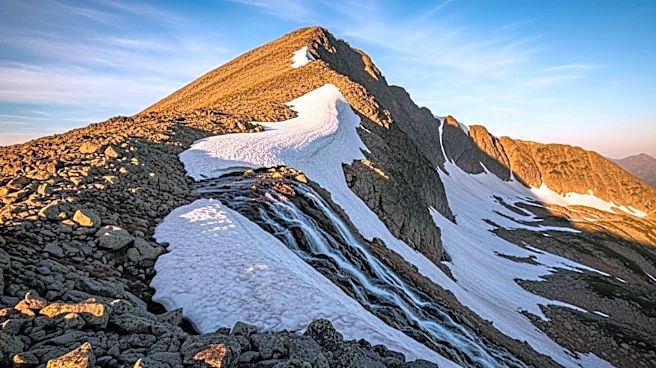
California's Sierra Nevada snowpack, expected to peak on April 1, has significantly melted due to record-breaking heat in March. State surveyors found minimal snow during their final survey, with the snowpack at just 18% of average, marking the second
smallest since 1950. This early melt is attributed to climate change, which is causing earlier runoff and compounding water issues in California and other Western states. The rapid snow loss is affecting water availability and increasing wildfire risks, as forests dry out earlier than usual. Despite the snowpack's decline, major reservoirs in Northern California remain nearly full due to previous wet years.
Why It's Important?
The early snow melt in California's Sierra Nevada underscores the impact of climate change on water resources and environmental conditions. This phenomenon poses challenges for water management, as the state traditionally relies on snowpack for about 30% of its water storage. The reduced snowpack heightens the risk of wildfires and affects natural ecosystems and fisheries. It also necessitates adaptations in water management strategies, including increased efficiency, wastewater recycling, and infrastructure retrofitting. The situation highlights the urgent need for climate resilience measures to address the changing patterns of water availability and environmental conditions.
What's Next?
California faces a challenging year for water management, with the need to use existing water resources carefully. The state may need to implement new strategies to enhance water system resilience, such as capturing more runoff and changing reservoir operations. Governor Gavin Newsom's administration is supporting infrastructure projects to address these challenges, including the construction of new reservoirs and water tunnels. As climate change continues to alter weather patterns, California will need to adapt its infrastructure and management practices to ensure sustainable water availability.