






What's Happening?
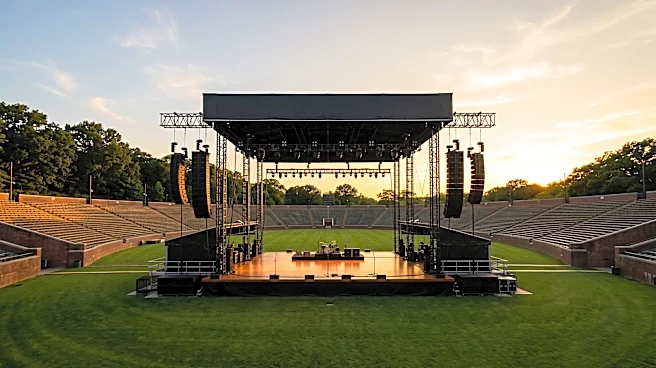
Forest Hills Stadium, a 14,000-seat outdoor venue in Queens, New York, has finalized a settlement with local residents, specifically the Forest Hills Gardens Corporation (FHGC), ending a years-long legal dispute. The agreement caps the number of annual
concerts at 28 through 2040, with a potential increase to 29 in future years. This resolution addresses long-standing complaints from the community regarding noise, crowds, and access to residential streets. The settlement also includes strict operating standards for each performance, such as an enforced curfew for amplified sound and real-time audio monitoring. Additionally, the venue will require explicit neighborhood approval for any fireworks displays. Event operator Tiebreaker, involved in the agreement alongside stadium owner West Side Tennis Club, has committed to financial contributions for local restoration and beautification projects, as well as ongoing per-show payments to support the community. The agreement also outlines measures to minimize local disruption, including designated attendee routes and the deployment of private security and post-show sanitation teams.
Why It's Important?
This settlement is significant for both the entertainment industry and urban communities in the U.S. For the live music sector, it provides a clear operational framework for a major venue, ensuring its continued ability to host concerts while setting precedents for community engagement and impact mitigation. The cap on shows, while a reduction from previous seasons, offers predictability for event organizers and artists. For residents of Forest Hills, the agreement brings enforceable protections against disruptions caused by large-scale events, addressing quality-of-life concerns such as noise pollution and traffic. The financial contributions and community safeguards outlined in the settlement could serve as a model for other venues operating in residential areas, highlighting the importance of balancing economic activity with community well-being. This resolution demonstrates a shift towards more collaborative approaches in managing the impact of large entertainment venues on their surrounding neighborhoods, potentially influencing future urban planning and event permitting processes across the country.
What's Next?
Following the settlement, Forest Hills Stadium will operate under the new terms, limiting its concert schedule to 28 shows annually, with a potential increase to 29. The venue will implement the agreed-upon operating standards, including strict curfews and real-time audio monitoring. A new community ombudsman will be deployed to work directly with the NYPD to address neighborhood issues in real-time during events. Event operator Tiebreaker will proceed with the promised financial contributions for local beautification and ongoing community support. The Forest Hills Gardens Corporation anticipates building a constructive working relationship with the stadium, ushering in a new chapter for the community. This agreement resolves all pending litigation among the involved parties and can be renewed for up to seven additional years, suggesting a long-term commitment to these new operational guidelines. Concertgoers can expect a continued, albeit slightly reduced, schedule of events, with a greater emphasis on minimizing neighborhood impact.
Beyond the Headlines
The resolution at Forest Hills Stadium underscores a broader societal trend of increasing community scrutiny over the operations of large-scale entertainment venues, particularly in densely populated urban environments. This case highlights the tension between economic development, cultural offerings, and the preservation of residential quality of life. The establishment of a dedicated community ombudsman and the requirement for neighborhood approval for certain activities, like fireworks, reflect a growing demand for direct community involvement and accountability from businesses. This settlement could influence legal and regulatory frameworks for event venues nationwide, encouraging more proactive engagement with local residents and the integration of community impact assessments into operational planning. It also points to the evolving role of local governance in mediating disputes between commercial entities and their constituents, emphasizing the importance of negotiated solutions that prioritize sustainable coexistence rather than outright prohibition.