
What's Happening?
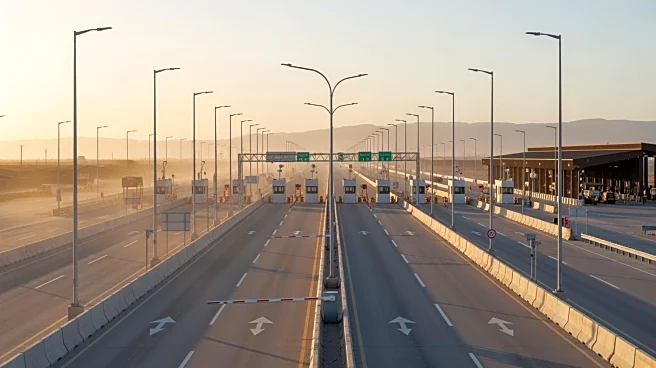
The Rafah border crossing between Gaza and Egypt has reopened, marking a significant step in the Israel-Hamas ceasefire agreement. However, the reopening is largely symbolic, as only a limited number of
Palestinians are allowed to cross, and no goods are permitted through. Approximately 50 Palestinians are expected to cross in each direction daily, with thousands more hoping to leave Gaza for medical treatment. The crossing's reopening is part of a broader ceasefire agreement that includes humanitarian aid and a partial Israeli troop pullback.
Why It's Important?
The reopening of the Rafah crossing is a critical component of the ceasefire agreement, offering a potential pathway for humanitarian relief and medical evacuations. It represents a tentative step towards easing the humanitarian crisis in Gaza, where many residents require urgent medical care. The crossing's operation is also a test of the ceasefire's durability and the willingness of involved parties to adhere to the agreement. Successful implementation could pave the way for further negotiations and a more stable peace process.
What's Next?
If the ceasefire holds, the Rafah crossing may see increased traffic, facilitating more significant humanitarian aid and medical evacuations. The international community will likely monitor the situation closely, with potential diplomatic efforts to support the ceasefire and address underlying issues. The reopening could also influence broader regional dynamics, impacting relations between Israel, Egypt, and Palestinian authorities.