






What's Happening?
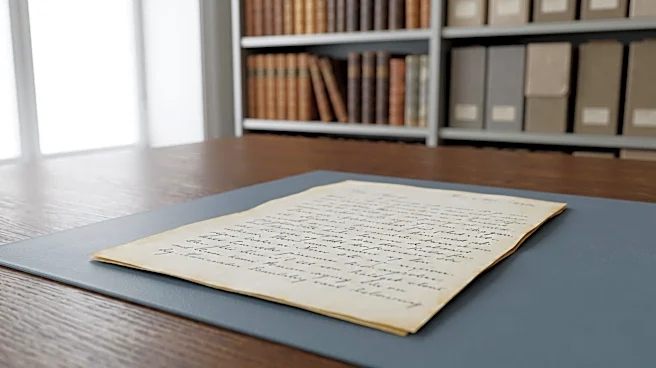
The National Endowment for the Humanities (NEH) has provided funding to the Norwegian American Historical Association (NAHA) for the digitization of its collections. This initiative aims to preserve and make accessible historical documents, including
a letter from Hermana Rye Haugan to Ellen Hervik dated January 17, 1944, from Chicago, Illinois. The digitization project is part of a broader effort by the NEH to support humanities research, education, and public programs across the United States. By funding such projects, the NEH helps institutions like NAHA to share their unique cultural heritage with a wider audience, ensuring that valuable historical records are preserved for future generations and made available for scholarly research and public interest. This particular letter, written in Norwegian, is categorized as correspondence and offers insights into the lives of Norwegian Americans during the mid-20th century.
Why It's Important?
This funding from the National Endowment for the Humanities is crucial for the preservation of American cultural heritage, particularly for ethnic communities. The digitization of historical documents from organizations like the Norwegian American Historical Association ensures that primary sources are not lost to time and decay. It democratizes access to history, allowing researchers, students, and the general public to explore these materials regardless of their geographical location. For the Norwegian American community, this project helps to maintain a tangible link to their past, fostering a deeper understanding of their ancestors' experiences and contributions to American society. Furthermore, it supports the broader academic community by providing new resources for studies in immigration, cultural assimilation, and the social history of the United States, enriching the national narrative with diverse perspectives.
What's Next?
The immediate next step for the Norwegian American Historical Association will be the continued digitization and cataloging of its collections, making more historical documents available online. This process typically involves scanning, metadata creation, and ensuring long-term digital preservation. Future initiatives may include public outreach programs, such as online exhibitions or educational workshops, to highlight the newly digitized materials and engage a broader audience. The success of this project could also encourage other cultural heritage institutions to seek similar funding from the National Endowment for the Humanities, leading to a wider effort in digitizing and preserving diverse historical records across the nation. Researchers and the public can anticipate a growing online repository of Norwegian American history.
Beyond the Headlines
Beyond the immediate benefit of preserving historical documents, this NEH-funded digitization project underscores a broader commitment to cultural memory and identity in a diverse nation. In an increasingly digital world, the accessibility of historical records online plays a vital role in shaping collective understanding and fostering a sense of belonging among various communities. It also highlights the ongoing challenges faced by smaller historical societies in maintaining and sharing their collections, making federal support indispensable. The project contributes to the digital humanities landscape, demonstrating how technology can be leveraged to enhance historical scholarship and public engagement. This effort also implicitly addresses the importance of multilingual historical sources, ensuring that narratives from non-English speaking communities are integrated into the broader American historical record.