







What's Happening?
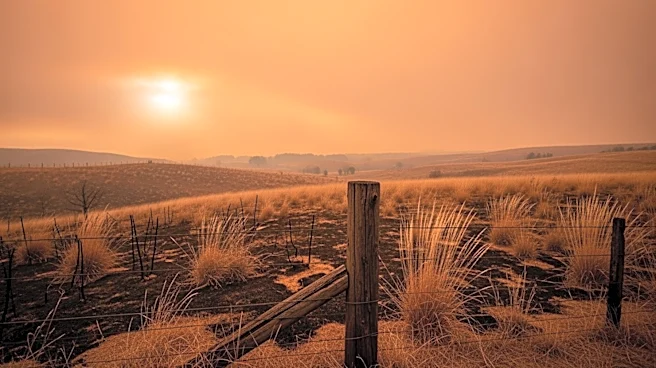
The American Great Plains, a region crucial to the U.S. cattle industry, has been severely impacted by record-breaking wildfires this spring. Nebraska, a leading beef producer, has seen over a million acres of grasslands burned, including the Morrill
fire, which consumed more than 642,000 acres. These fires have been fueled by dry conditions, strong winds, and rising temperatures. The devastation has left ranchers facing significant challenges, with many areas unsuitable for grazing this year. The fires have also resulted in the loss of thousands of livestock and critical infrastructure, such as fencing and forage. The situation is exacerbated by ongoing drought conditions across the High Plains, affecting water supplies and rangelands.
Why It's Important?
The wildfires pose a significant threat to the U.S. cattle industry, which relies heavily on the Great Plains for grazing. The destruction of grasslands could lead to long-term economic impacts if recovery is slow, affecting beef production and prices. Ranching communities, which are tightly knit and extend beyond state lines, are facing severe challenges in managing the aftermath. The fires highlight the increasing risks associated with climate change and land management practices, which have contributed to the frequency and intensity of such disasters. The situation underscores the need for adaptive strategies to manage grasslands and mitigate future fire risks.
What's Next?
Ranchers are hoping for good summer rains to aid in the recovery of the burned grasslands. However, if precipitation is insufficient or too intense, the challenges may persist. Experts believe that the grasslands can recover, potentially healthier than before, but this requires changes in land management practices. The focus is on balancing cattle grazing with the natural fire cycles that historically maintained these ecosystems. The ongoing drought conditions in the region will continue to be monitored, as they play a crucial role in the recovery process.
Beyond the Headlines
The wildfires have brought attention to the ecological role of fire in grassland systems. Historically, fires helped regenerate vegetation and maintain healthy ecosystems. The encroachment of woody shrubs and trees due to fire suppression has increased fire risks. There is an opportunity to rethink land management practices to better coexist with natural fire cycles, ensuring the sustainability of ranching and the preservation of native ecosystems. This event highlights the broader implications of climate change and the need for proactive measures to protect vulnerable landscapes.