
What's Happening?
Russia is actively working to expand the International North-South Transport Corridor (INSTC), a trade network that connects Russia, Central Asia, Iran, and India, facilitating a link between Northern
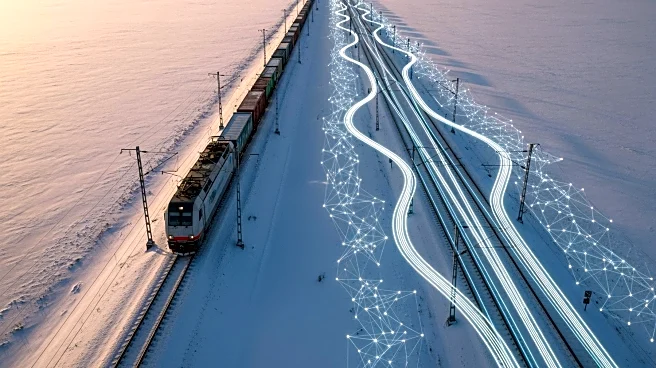
Europe and South Asia. This development is seen as a strategic move by Moscow to bypass the traditional maritime routes through the Black Sea, Suez Canal, and Red Sea, which are becoming increasingly insecure and costly. The INSTC offers a more direct and secure alternative, allowing Russian goods to travel by rail to Azerbaijan's Baku port, cross the Caspian Sea, and continue through northern Iran to the Persian Gulf. This corridor is not only economically beneficial but also serves as a strategic hedge against Western sanctions, enhancing trade ties with India and potentially China. Iran is poised to become a central hub in Eurasian trade, gaining influence without military involvement.
Why It's Important?
The expansion of the INSTC is significant as it provides Russia with a more secure and cost-effective trade route, reducing its reliance on maritime paths that are vulnerable to geopolitical tensions. This corridor strengthens Russia's economic ties with South Asia, particularly India, and potentially China, while also offering Iran a strategic role in regional trade. For the U.S. and Western powers, the development of the INSTC poses a challenge as it could weaken the enforcement of sanctions on Iran and shift regional power dynamics. The corridor's completion could reshape global logistics, offering a durable alternative to constrained maritime routes and enhancing the strategic influence of both Russia and Iran.
What's Next?
Russia and Iran have announced plans to accelerate the completion of the INSTC, with high-level meetings between Russian and Iranian officials underscoring the project's strategic importance. The corridor could eventually integrate with East-West routes to China and Europe, forming a comprehensive Eurasian rail and shipping network. This development will be closely monitored by the U.S. and other Western nations, as it could alter trade interests and sanctions policies. The completion of the Rasht-Astara railway segment is a critical step in this process, with both Moscow and Tehran committed to overseeing its progress.