




What's Happening?
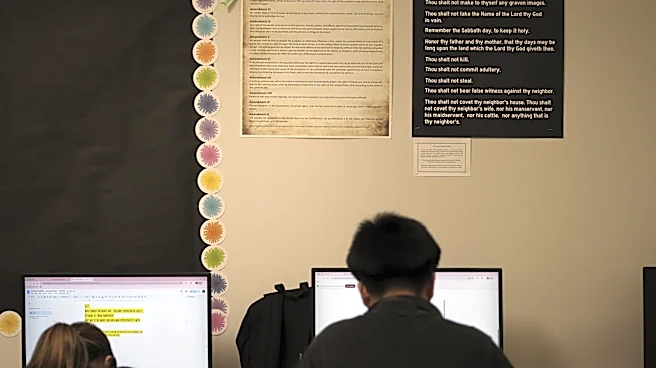
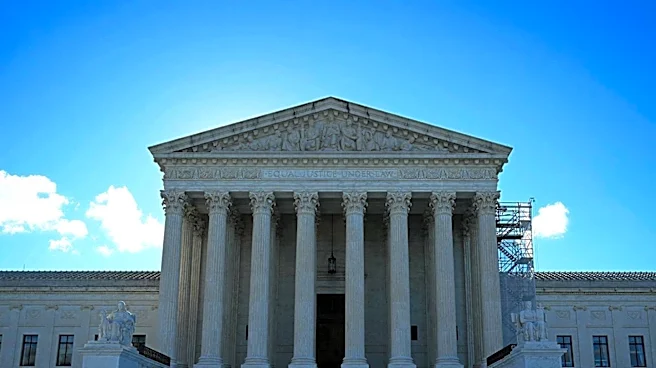
A coalition of families, representing various religious denominations, has petitioned the U.S. Supreme Court to overturn Texas Senate Bill 10. This state law mandates the display of the Ten Commandments in public school classrooms. The families, supported
by several civil liberties organizations, argue that SB 10 infringes upon the First Amendment of the U.S. Constitution. Their court filing on Monday asserts that the law 'imposes on public school children, for nearly every hour they are in school, the state's favored scripture.' They contend that a recent appeals court decision upholding the Texas law contradicts established Supreme Court precedents, including the 2022 ruling in *Kennedy v. Bremerton School District*, which addressed 'problematically coercive' religious messages, and the 1980 ruling in *Stone v. Graham*, which found that posting the Ten Commandments in schools violates the Constitution's establishment clause. Plaintiffs, including Rabbi Joshua Fixler and atheist Nichole Manning, expressed concerns about the law's impact on children's religious freedom and the state's role in religious instruction.
Why It's Important?
This legal challenge is significant because it directly confronts the principle of separation of church and state within the public education system, a cornerstone of U.S. constitutional law. If the Supreme Court agrees to hear the case and rules against Texas, it would reinforce the prohibition against government-mandated religious displays in public schools, impacting similar legislative efforts in other states. Conversely, if the Court upholds the Texas law, it could signal a shift in the interpretation of the Establishment Clause, potentially opening the door for more religious displays and instruction in public institutions. This case affects millions of public school students and their families, particularly those from diverse religious backgrounds or no religious affiliation, who may feel marginalized or coerced by state-sanctioned religious messages. The outcome will have broad implications for religious freedom, educational policy, and the ongoing debate about the role of religion in public life across the United States.
What's Next?
The Supreme Court will first decide whether to hear the case. If the Court grants certiorari, oral arguments would likely be scheduled for a future term, with a decision expected months later. Should the Court decline to hear the case, the appeals court ruling upholding Texas SB 10 would stand, allowing the law to remain in effect. Regardless of the Supreme Court's decision, the issue is likely to continue to be a point of contention. Advocacy groups on both sides will continue to monitor and influence legislative efforts at the state level regarding religious displays in public schools. The ruling, whatever it may be, will set a precedent that could encourage or deter similar legislation in other states, potentially leading to further legal challenges or legislative actions aimed at either expanding or restricting religious expression in public education. The debate will also continue in public discourse, reflecting the diverse views on religious freedom and the role of government in religious matters.
Beyond the Headlines
Beyond the immediate legal implications, this case touches upon the evolving cultural and ethical landscape of religious pluralism in the U.S. The plaintiffs' arguments highlight the potential for state-mandated religious displays to create an environment where students from minority faiths or non-religious backgrounds feel alienated or pressured. This raises ethical questions about inclusivity and the protection of individual conscience within public institutions designed to serve a diverse populace. The case also reflects a broader societal tension between those who advocate for a more prominent role of religion in public life and those who champion a strict separation of church and state to safeguard religious freedom for all. The outcome could influence how public schools approach religious diversity, potentially shaping curriculum development, classroom environments, and the overall experience of students from various backgrounds for generations to come. It underscores the ongoing challenge of balancing religious expression with constitutional principles in a pluralistic society.