









What's Happening?
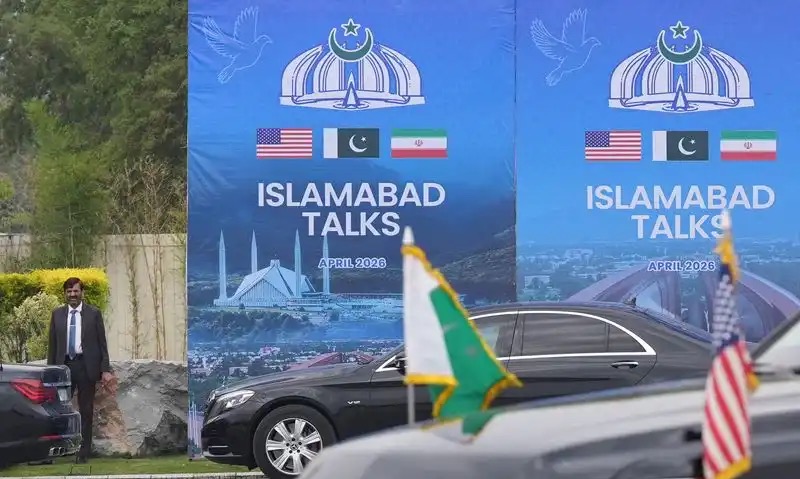
The Iranian delegation encountered security threats while traveling to Islamabad for negotiations with the US, according to reports from Hezbollah-affiliated media. Professor Mohammad Marandi, part of the delegation, claimed they were warned of a potential
attack on their aircraft, leading to increased security measures. The delegation took an alternative route back to Tehran after confirming the threat. Marandi, described as a regime spokesperson, expressed distrust towards the US and indicated that Iran is bolstering its military capabilities amid ongoing negotiations. The talks, which ended without a breakthrough, focused on issues such as the Strait of Hormuz and Iran's nuclear program.
Why It's Important?
The security threats faced by the Iranian delegation highlight the tense and volatile nature of US-Iran relations. The incident underscores the challenges in achieving diplomatic resolutions amid mutual distrust and military posturing. Iran's decision to re-arm while negotiating suggests a lack of confidence in diplomatic outcomes and a preparation for potential conflict. This development could escalate tensions in the region, affecting global security and stability. The situation also impacts international diplomatic efforts, as other countries may need to mediate or respond to the heightened tensions.
What's Next?
Negotiating teams from the US and Iran may return to Islamabad for further talks, but the security threats and Iran's military preparations could complicate future negotiations. The international community, particularly countries with vested interests in Middle Eastern stability, may need to intervene or facilitate dialogue to prevent escalation. The US's strategic response to Iran's actions, including the blockade of the Strait of Hormuz, will be crucial in shaping the next phase of negotiations and regional dynamics.