






What's Happening?
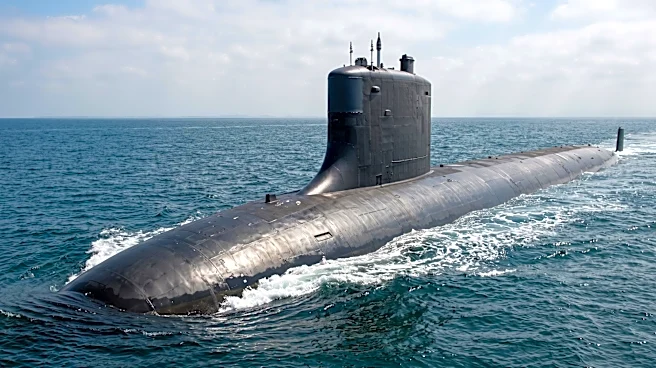
The United States Navy is set to establish a new production facility, named Arsenal-2, in Baltimore, Maryland, to manufacture components for Virginia-class submarines. This initiative is a collaboration between the U.S. government and the American company
Anduril. President Trump announced the project in early October. Anduril will be co-responsible for developing the Sparrows Point shipyard, contributing $3.7 billion to the total investment of $6.6 billion, with the U.S. government providing the remaining $2.9 billion. The components produced at Arsenal-2 will be sent to General Dynamics Electric Boat in Connecticut and Newport News Shipbuilding in Virginia for final assembly. This investment is projected to create nearly 3,100 new jobs in Maryland and is scheduled to begin operations in 2030. The project has also garnered attention from Australia, as it is expected to mitigate delays in submarine deliveries to Canberra under the AUKUS agreement.
Why It's Important?
This accelerated submarine production initiative is crucial for bolstering the U.S. Navy's capabilities and supporting key international defense agreements. The establishment of Arsenal-2 addresses the growing demand for Virginia-class submarines, which are vital for maintaining naval superiority and fulfilling commitments to allies. The significant investment from both the private sector (Anduril) and the U.S. government underscores the strategic importance of this project. For Maryland, the creation of 3,100 jobs represents a substantial economic boost, particularly in the context of the ongoing midterm election campaign. Furthermore, this development directly impacts the AUKUS security partnership, as it aims to reduce the risk of delays in delivering nuclear-powered submarines to Australia, thereby strengthening trilateral defense cooperation between the U.S., UK, and Australia in the Indo-Pacific region.
What's Next?
The new Baltimore shipyard, Arsenal-2, is slated to commence operations in 2030, at which point it will begin manufacturing critical components for Virginia-class submarines. The parts will then be transported to existing shipyards in Connecticut and Virginia for final assembly. This timeline suggests a sustained effort over the next several years to develop the facility and integrate it into the broader submarine production pipeline. The success of this venture will likely be closely monitored by both domestic stakeholders, given the job creation and economic investment, and international partners, particularly Australia, which is awaiting the delivery of U.S. submarines. Future developments will involve the construction and outfitting of the shipyard, hiring and training of the new workforce, and the eventual commencement of component production to support the U.S. Navy's fleet expansion and international commitments.
Beyond the Headlines
The partnership between the U.S. government and Anduril for submarine component production signifies a broader trend of increased collaboration between the public and private sectors in national defense. This model could potentially be replicated in other critical defense industries to accelerate production and innovation. The project also highlights the strategic importance of domestic manufacturing capabilities for national security, reducing reliance on potentially vulnerable supply chains. Ethically, the creation of thousands of jobs and the economic revitalization of the Baltimore area present significant community benefits. Legally, the financial contributions and operational responsibilities between the government and a private entity will be governed by complex contractual agreements. Culturally, this investment reinforces the U.S. commitment to maintaining a robust naval presence and supporting its allies through tangible defense industrial cooperation, particularly in the face of evolving global security challenges.