






What's Happening?
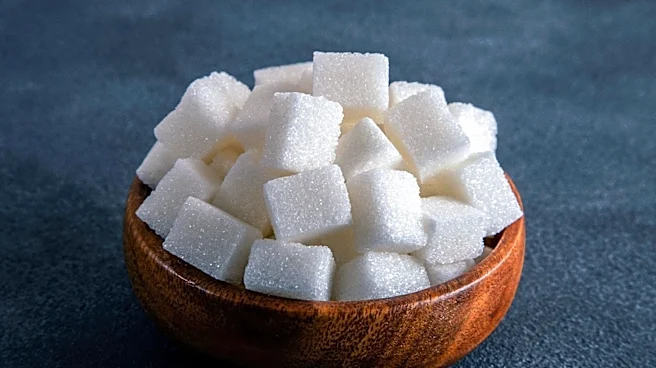
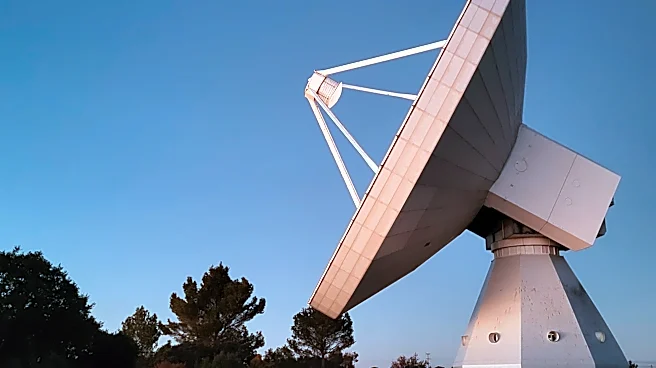
Astronomers have discovered a type of sugar, erythrulose, in the interstellar medium, which consists of thin clouds of gas and dust between stars. This sugar is also found in raspberries and self-tanners on Earth. The discovery was made using two radio
telescopes in Spain, which collected data from a large gas cloud near the center of the Milky Way. By comparing telescope signals to laboratory samples, researchers identified the sugar in gas form. This finding adds to the growing list of complex organic molecules detected in space, including those that are building blocks for genetic material and cellular components. The results were published in the journal Nature Astronomy.
Why It's Important?
The detection of erythrulose in space is significant because it supports the theory that essential ingredients for life could be widespread across the galaxy. This discovery suggests that the building blocks of life might not be unique to Earth, potentially opening the possibility for life to develop elsewhere in the universe. The presence of such complex sugars in space indicates that the chemical processes necessary for life could occur in other regions of the galaxy. This finding contributes to our understanding of how life might have originated on Earth and whether similar processes could occur on other planets.
What's Next?
Researchers plan to continue searching for more sugars and other complex organic molecules in space to better understand how they form and convert into different forms. This ongoing research aims to determine whether these molecules could have been delivered to Earth via comets or space rocks, or if they were already present in the early solar system. The study's authors suggest that finding these sugars in one location implies they could be present in other parts of the galaxy, further supporting the potential for life beyond Earth.
Beyond the Headlines
The discovery of erythrulose in space highlights the intricate chemistry occurring in the galaxy and raises questions about the origins of life. It suggests that the essential components for life might be more common than previously thought, potentially leading to a paradigm shift in our understanding of life's distribution in the universe. This research also underscores the importance of astrobiology in exploring the potential for life beyond Earth and the role of interstellar chemistry in shaping planetary systems.