







What's Happening?
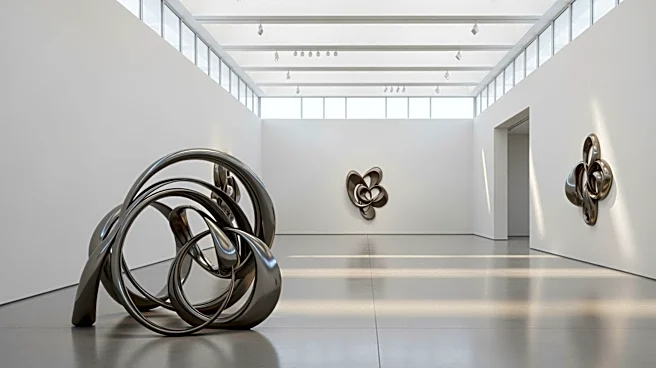
The Los Angeles County Museum of Art (LACMA) has unveiled its new David Geffen Galleries, a project over 20 years in the making. Designed by Swiss architect Peter Zumthor, the galleries replace much of LACMA's mid-century campus with a single, expansive
structure. The design aims to eliminate hierarchy by placing objects and artworks from various geographies and time periods into direct dialogue. The galleries are organized around bodies of water, emphasizing oceans as conduits for trade and migration. Artist Mariana Castillo Deball contributed a plaza installation that features native animal tracks and elements of Quetzalcoatl, reflecting the museum's theme of cultural exchange.
Why It's Important?
The opening of the David Geffen Galleries marks a significant shift in how museums can present art and history. By organizing exhibits around oceans rather than traditional geographic or chronological categories, LACMA challenges conventional museum practices and encourages visitors to consider the interconnectedness of cultures. This approach reflects broader societal themes of migration and cultural exchange, particularly relevant in a border state like California. The galleries' design and thematic focus may influence future museum projects and curatorial practices, promoting a more inclusive and holistic view of art history.
What's Next?
The public opening of the David Geffen Galleries is scheduled for May 4, following a preview period for museum members. As visitors experience the new galleries, feedback will likely shape future exhibitions and programming. LACMA's innovative approach may inspire other institutions to reconsider their curatorial models, potentially leading to collaborations and exchanges that further explore global cultural connections. The museum's emphasis on dialogue and exchange may also attract diverse audiences, fostering greater community engagement and participation.
Beyond the Headlines
The David Geffen Galleries' focus on cultural exchange and migration highlights important ethical and social issues, particularly in the context of immigration enforcement in California. By embedding the labor of migrant workers into the museum's surface, LACMA acknowledges the contributions of these individuals to the state's cultural landscape. This approach raises questions about representation and inclusion in cultural institutions, encouraging museums to consider how they can better reflect the diverse communities they serve. The galleries' design and thematic focus may also prompt discussions about the role of museums in addressing contemporary social challenges.