




What's Happening?
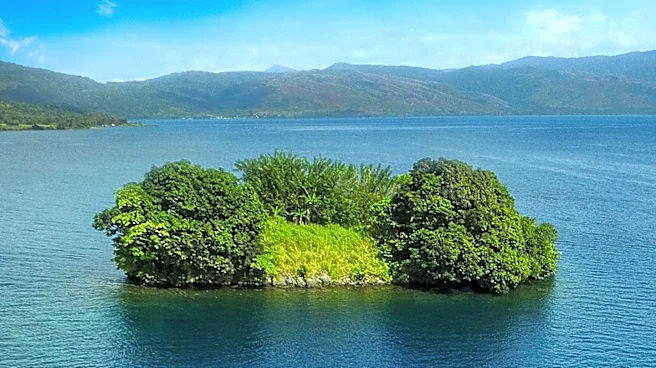
A floating island in a British Columbia reservoir has reappeared approximately 20 miles (32km) from its last known location after seemingly vanishing in July. The organization responsible for managing the reservoir initially dismissed reports of its reappearance
as a 'hoax.' However, BBC Verify utilized satellite imagery to trace the island's journey and investigate the reasons behind its significant displacement. The phenomenon involves a natural landmass that detaches and floats, a characteristic that makes its movement unpredictable. This particular island's disappearance and subsequent reappearance at a considerable distance have drawn attention to the dynamic nature of such geological formations within reservoir environments.
Why It's Important?
While this event occurred in British Columbia, Canada, it highlights broader implications for reservoir management and environmental monitoring, which are relevant to U.S. contexts. The unexpected movement of large floating landmasses can pose navigational hazards for watercraft, potentially disrupt water intake systems for hydroelectric power or municipal water supplies, and impact local ecosystems. For U.S. states with numerous reservoirs, understanding the dynamics of such phenomena is crucial for infrastructure safety, environmental protection, and emergency preparedness. The initial skepticism from the managing organization underscores the challenge of tracking and predicting the behavior of these natural occurrences, emphasizing the need for advanced monitoring techniques, including satellite imagery, to ensure public safety and operational continuity in water management.
What's Next?
Following the confirmation of the island's reappearance and movement, the reservoir management organization will likely need to implement enhanced monitoring protocols for this and potentially other similar floating landmasses. This could involve more frequent satellite surveillance, drone inspections, or physical surveys to track its trajectory and assess any potential risks. Further investigation into the specific environmental factors that contributed to its movement, such as water currents, wind patterns, or changes in water levels, may also be undertaken. The findings could inform updated safety guidelines for reservoir users and contribute to a better understanding of the geological and hydrological processes at play in large water bodies, potentially influencing management strategies for similar features in U.S. reservoirs.
Beyond the Headlines
The vanishing and reappearance of the floating island touches upon the broader theme of dynamic natural landscapes and the challenges they present for human infrastructure and planning. This event serves as a reminder that even seemingly stable environments can undergo significant, sometimes rapid, changes. From an ecological perspective, such floating islands can act as mobile habitats, transporting species and altering local biodiversity, which could have long-term implications for the reservoir's ecosystem. Culturally, these mysterious disappearances and reappearances can also spark local folklore and interest, highlighting the human fascination with unexplained natural phenomena. The use of satellite imagery to track its movement also underscores the increasing reliance on advanced technology for environmental monitoring and crisis management in an era of evolving natural landscapes.