






What's Happening?
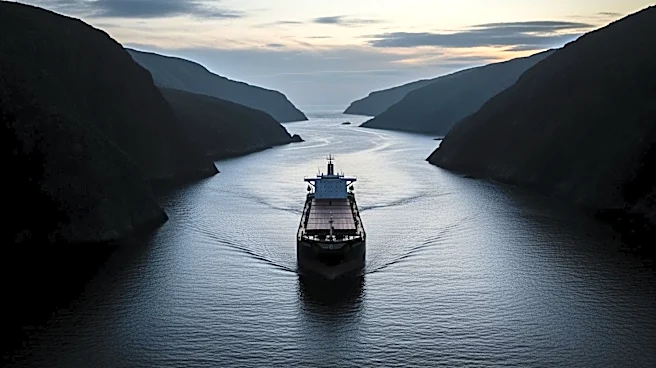
President Trump has announced a naval blockade of the Strait of Hormuz following failed peace talks with Iran. The blockade aims to prevent ships from entering or leaving the waterway, a strategic chokepoint for global oil shipments. This move is part
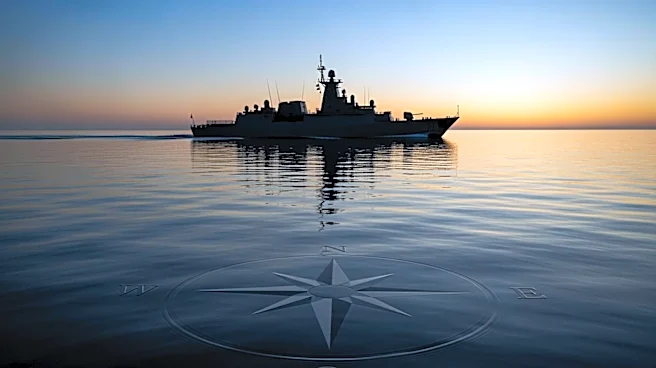
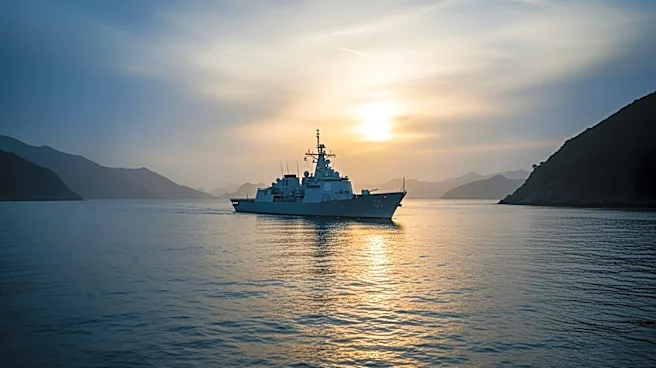
of a broader strategy to pressure Iran economically without resorting to military conflict. The U.S. Navy, including destroyers USS Frank E. Peterson and USS Michael Murphy, is actively involved in mine-clearing operations to ensure safe passage through the strait. Iran's Revolutionary Guard has declared the strait open for civilian vessels but warned against military presence. The blockade is seen as a rare but potentially effective measure to curb Iran's nuclear ambitions.
Why It's Important?
The blockade of the Strait of Hormuz is significant due to its potential impact on global oil markets and geopolitical stability. The strait is a critical passage for a substantial portion of the world's oil supply, and any disruption could lead to increased oil prices and economic instability. The U.S. aims to leverage this strategic position to force Iran back to the negotiating table over its nuclear program. The blockade also reflects a shift in U.S. foreign policy towards more direct and assertive actions under President Trump's administration. This development could strain U.S.-Iran relations further and impact international diplomatic efforts in the region.
What's Next?
The immediate focus will be on the effectiveness of the blockade in compelling Iran to reconsider its nuclear ambitions. The U.S. will likely continue mine-clearing operations to maintain safe passage for commercial vessels, while monitoring Iran's response. Diplomatic channels may reopen if Iran signals a willingness to negotiate. However, the situation remains volatile, with potential for escalation if Iran retaliates or if the blockade significantly disrupts global oil supplies. International stakeholders, including major oil-importing countries, will be closely watching the developments and may seek to mediate or influence the outcome.