



What's Happening?
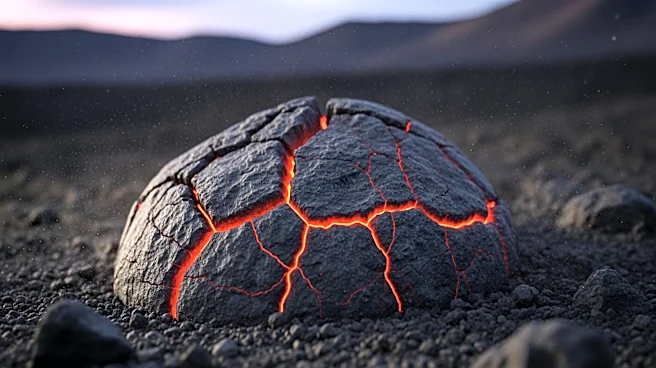
Iceland is experiencing an ongoing earthquake swarm in two of its most geologically active areas: the Reykjanes Ridge and the Bárðarbunga volcanic system. The seismic activity began on Saturday and has continued with multiple tremors, including several
above magnitude 2.0. The strongest recorded tremor reached a magnitude of 3.0 near Geirfugladrang. These swarms are typical for Iceland's geology, as the region lies on the Mid-Atlantic Ridge where tectonic plates move apart, causing frequent seismic activity.
Why It's Important?
The earthquake swarm in Iceland is a reminder of the country's unique geological characteristics, which include frequent seismic and volcanic activity. Such events can impact local communities, tourism, and infrastructure, necessitating ongoing monitoring and preparedness. The activity also contributes to scientific understanding of tectonic movements and volcanic systems, offering insights into the Earth's geological processes. For Iceland, these swarms are a regular occurrence, but they highlight the need for robust emergency response strategies.