




What's Happening?
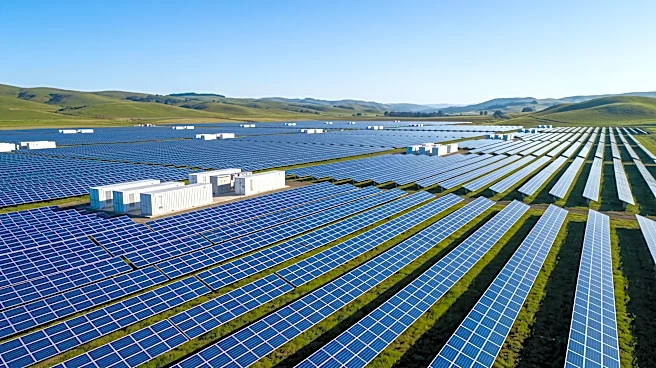
The Maryland Public Service Commission (PSC) has conditionally awarded an energy storage capacity credit to the Jade Meadow III battery storage project, which is part of Maryland's largest proposed solar initiative. This award, made during the first round
of the state's Next Generation Energy Act procurement, aims to provide a more stable revenue stream for large energy storage projects by hedging against future PJM Interconnection capacity market price uncertainty. The PSC also selected the Chalk Point storage plan in Prince George's County for the same credit. These projects are projected to offer 440 megawatts of potential energy storage capacity with four-hour durations under flat, 15-year award terms, pending commission approval. The combined estimated cost for these two projects is calculated at 6.98 cents per month for a typical Maryland residential customer. The PSC determined these projects were the most cost-effective and highest-ranked among the initial applicants. Both projects must secure construction approval from the PSC, which will involve additional public and evidentiary hearings concerning safety, siting, and environmental impacts. The Jade Meadow III project, primarily located in Garrett County with a portion in Allegany County, is expected to begin construction in 2026 and achieve commercial operations in the latter half of 2028.
Why It's Important?
This conditional credit award is a significant step for Maryland in achieving its state energy policy goals, as set by the Legislature in recent years. By providing a stable revenue stream, the credit enhances the financing prospects for large-scale energy storage projects, which are crucial for integrating intermittent renewable energy sources like solar into the grid. The development of such projects contributes to grid stability and reliability, reducing reliance on fossil fuels and advancing the state's decarbonization efforts. The Jade Meadow III project, being the largest solar initiative proposed in Maryland to date, is expected to generate substantial local tax revenue, foster economic development, and provide payments to landowners. While the initial awards fell short of the 800-megawatt target for Round 1, the PSC anticipates a more robust response in Round 2, with over 40 additional energy storage projects from PJM's Cycle 1 interconnection process expected to apply. This ongoing effort underscores Maryland's commitment to expanding its renewable energy infrastructure and transitioning towards a cleaner energy future, potentially serving as a model for other states aiming to bolster their renewable energy portfolios.
What's Next?
The Jade Meadow III and Chalk Point projects must now apply for construction approval from the Maryland Public Service Commission. This process will entail additional public and evidentiary hearings to address critical issues such as safety, siting, and environmental impacts. These hearings will provide opportunities for public input and expert review, ensuring that the projects adhere to regulatory standards and community concerns. The PSC is also preparing for Round 2 of the credit awards process, with applications expected by January 1, 2027. This next round is anticipated to attract a larger pool of applicants, potentially including over 40 additional energy storage projects from PJM's Cycle 1 interconnection process, as the PSC aims to meet its energy storage targets. The Jade Meadow III project is slated to commence construction in 2026, with commercial operations projected to begin in the second half of 2028. The successful implementation and operation of these projects will be closely monitored as Maryland continues its efforts to expand renewable energy capacity and achieve its long-term energy policy objectives.
Beyond the Headlines
The conditional award of energy storage capacity credits highlights a broader trend in U.S. energy policy: the increasing recognition of energy storage as a critical component for a stable and decarbonized electricity grid. By mitigating price uncertainty in capacity markets, these credits address a key financial hurdle for large-scale renewable energy projects, making them more attractive to investors. This approach could set a precedent for other states looking to accelerate their transition to renewable energy by de-risking investments in essential infrastructure. Furthermore, the emphasis on public and evidentiary hearings for construction approval underscores the complex balance between energy development and environmental protection, as well as community engagement. The historical context of the project site, which includes former coal mining areas, also points to a potential model for repurposing industrial lands for renewable energy development, contributing to economic revitalization in regions historically reliant on fossil fuels. This shift not only supports environmental goals but also fosters new economic opportunities and job creation in the green energy sector.