



What's Happening?
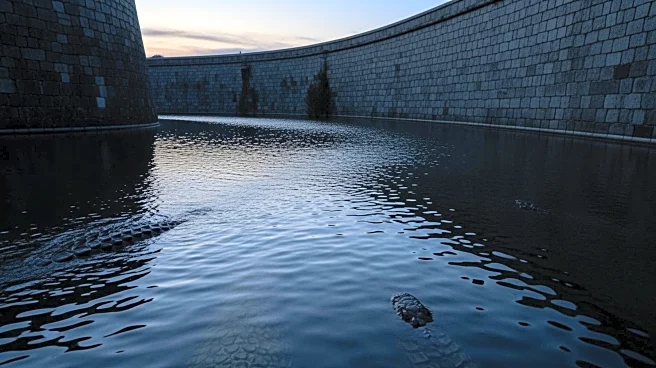
The Israeli Prison Service is considering the unconventional idea of using crocodile-filled moats as a security measure around prisons. This concept was explored during a visit by senior officials to the Hamat Gader site, known for its crocodile farm
and thermal baths. Yosi Mousanejad, CEO of Hamat Gader, explained that the visit was primarily educational, focusing on the complexities of raising crocodiles in captivity. The officials inquired about various aspects such as feeding methods, species differences, and the environmental needs of crocodiles. Mousanejad emphasized the challenges and dangers associated with keeping crocodiles, noting that they are wild predators requiring specific care. The cost of maintaining such a setup, including the crocodiles, handlers, and necessary infrastructure, was estimated to be significant.
Why It's Important?
The exploration of crocodile moats as a security measure highlights the innovative yet controversial approaches being considered for prison security. While the idea may offer a unique deterrent against escapes, it raises significant safety and ethical concerns. The potential risks to human safety, both for prison staff and the public, are considerable given the unpredictable nature of crocodiles. Additionally, the ethical implications of using wild animals in such a manner could spark debate among animal rights advocates. The financial burden of implementing and maintaining this security measure is another critical factor, as it involves substantial ongoing costs. This exploration reflects broader discussions on balancing security needs with ethical and practical considerations in public policy.
What's Next?
The Israeli Prison Service is currently conducting internal assessments to evaluate the feasibility of implementing crocodile moats. This includes further analysis of the logistical, financial, and ethical aspects of the proposal. Should the idea progress, it may require consultations with wildlife experts, security professionals, and possibly legislative approval. The outcome of these assessments will determine whether the concept moves forward or is shelved. Reactions from various stakeholders, including animal rights groups and security experts, could influence the decision-making process. The development of this proposal will be closely watched as it could set a precedent for unconventional security measures in correctional facilities.
Beyond the Headlines
The consideration of crocodile moats in Israeli prisons could have broader implications for how security is conceptualized in correctional facilities worldwide. It challenges traditional notions of security infrastructure and could inspire similar unconventional approaches elsewhere. However, it also raises questions about the ethical treatment of animals and the responsibilities of institutions to ensure humane conditions. The proposal may prompt a reevaluation of security strategies, emphasizing the need for innovative yet ethical solutions. Additionally, it highlights the ongoing tension between security imperatives and ethical considerations in public policy, potentially influencing future debates in this area.