








What's Happening?
Canada has announced a commitment to protect an additional three percent of its marine and ocean areas by the end of 2027. This pledge was made following Madame Diana Fox Carney's visit to Nunavut, where she serves as Canada's Ocean Envoy and Chair of the 12th
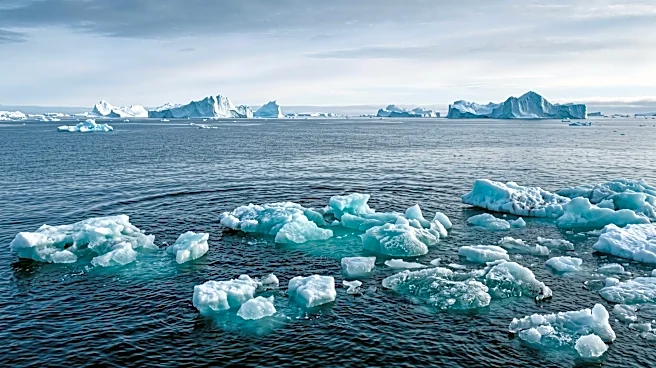
Our Ocean Conference. The initiative includes plans for at least two new ocean conservation agreements, which will incorporate long-term financing strategies such as the Project Finance for Permanence (PFP). A crucial component of this effort involves the Qikiqtani Inuit Association (QIA), recognized as a global leader in Arctic marine conservation. These new protections, along with existing Inuit-led and Indigenous-led marine protected areas, will bring over 20 percent of Canada’s ocean waters under protection. This moves Canada closer to its national goal of conserving 30 percent of its lands and waters by 2030. The Arctic marine environments are vital, serving as calving areas for narwhals and belugas, and breeding grounds for billions of migratory birds, including species that travel to the U.S. and South America.
Why It's Important?
This commitment by Canada has significant implications for the U.S. and the broader Western Hemisphere, particularly concerning migratory bird populations. Many species, such as the American Golden-Plover, Red-necked Phalaropes, and Semipalmated Sandpipers, breed in the Canadian Arctic and Alaska before migrating thousands of miles to nonbreeding grounds in South America, including the coasts of Peru, Colombia, Argentina, and Brazil. Additionally, Arctic breeding songbirds like the Redpoll, Snow Bunting, American Tree Sparrow, and the Snowy Owl are observed in southern Canada and the U.S. during winter. Safeguarding these Arctic ecosystems directly supports the health and sustainability of these bird populations, which are shared natural resources across North and South America. The involvement of Indigenous-led conservation efforts, like those of the QIA, highlights a model for effective, community-based environmental stewardship that could inform similar initiatives in the U.S. and internationally. The long-term financing strategies also offer a sustainable approach to conservation, potentially influencing future funding models for large-scale environmental projects.
What's Next?
Canada aims to finalize at least two new ocean conservation agreements by the end of 2027, which will incorporate long-term financing strategies. The Qikiqtani Inuit Association (QIA) is expected to play a central role in these efforts, continuing its leadership in marine conservation. Audubon, a U.S.-based organization, has expressed its support and looks forward to continuing its engagement in Indigenous- and Inuit-led conservation initiatives. Audubon also plans to participate in the One Ocean and Global Indigenous Summits, sharing its expertise in hemispheric conservation strategy. These upcoming events and collaborations will be crucial in shaping the implementation of Canada's marine protection goals and could foster further international cooperation on Arctic conservation. The success of these projects will be monitored as Canada progresses towards its 2030 conservation targets, potentially setting precedents for other nations with Arctic territories.
Beyond the Headlines
The expanded marine protections in the Canadian Arctic underscore a growing recognition of the interconnectedness of global ecosystems and the critical role of Indigenous knowledge in environmental stewardship. The focus on long-term financing mechanisms, such as Project Finance for Permanence (PFP), suggests a shift towards more sustainable and resilient conservation funding models, moving beyond short-term grants. This approach could inspire similar financial innovations in U.S. conservation efforts, particularly in regions with significant ecological value. Furthermore, the emphasis on protecting migratory bird habitats highlights the ethical responsibility of nations to collaborate on conservation, as these species transcend political borders. The initiative also implicitly acknowledges the cultural significance of these environments for Indigenous communities, whose traditional practices and livelihoods are deeply intertwined with the health of the Arctic. This holistic approach to conservation, integrating ecological, financial, and cultural dimensions, represents a progressive model for addressing complex environmental challenges.