








What's Happening?
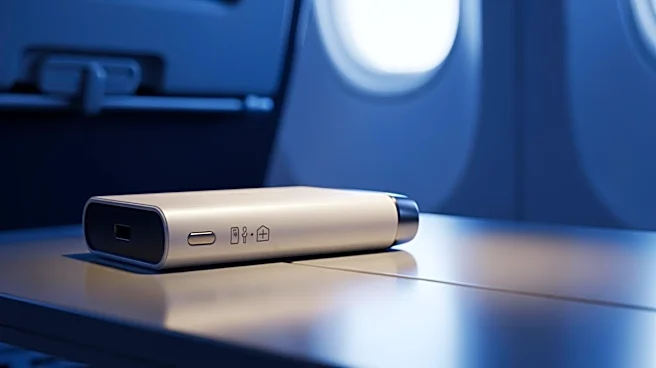
American Airlines has announced a new policy regarding the use of portable chargers on its flights. Starting Friday, passengers will be limited to carrying a maximum of two lithium-ion chargers, each capped at 100 watt-hours or less. These devices must
be kept in plain sight during use and cannot be stored in overhead compartments or recharged during flights. This policy change follows a safety alert issued by the Federal Aviation Administration (FAA) last September, highlighting the risks associated with lithium-powered batteries. The FAA reported at least 50 incidents involving smoke, fire, or extreme heat from such batteries last year, prompting airlines to revise their safety protocols. Southwest Airlines has already implemented a similar policy, allowing only one charger per passenger.
Why It's Important?
The updated policy by American Airlines is significant as it addresses growing safety concerns related to lithium-ion batteries on flights. These batteries have been linked to several incidents of smoke and fire, posing risks to passenger safety and flight operations. By limiting the number of chargers and restricting their use, American Airlines aims to mitigate these risks and enhance onboard safety. This move reflects a broader industry trend towards stricter safety measures, as airlines seek to prevent potential hazards and ensure passenger well-being. The policy also aligns with international practices, as seen in Japan, where similar restrictions are in place. This proactive approach by airlines is crucial in maintaining safety standards and preventing disruptions caused by battery-related incidents.
What's Next?
As American Airlines implements this new policy, it is likely that other airlines may follow suit, adopting similar restrictions to address safety concerns. The airline industry may also see further regulatory guidance from aviation authorities like the FAA, as they continue to monitor and address the risks associated with lithium-ion batteries. Passengers will need to adjust to these new rules, ensuring compliance to avoid penalties and ensure a safe travel experience. Additionally, airlines may invest in further safety training for staff to effectively manage and respond to battery-related incidents. The ongoing focus on safety could lead to innovations in battery technology, aiming to reduce risks and improve the safety of portable electronic devices used during flights.