





What's Happening?
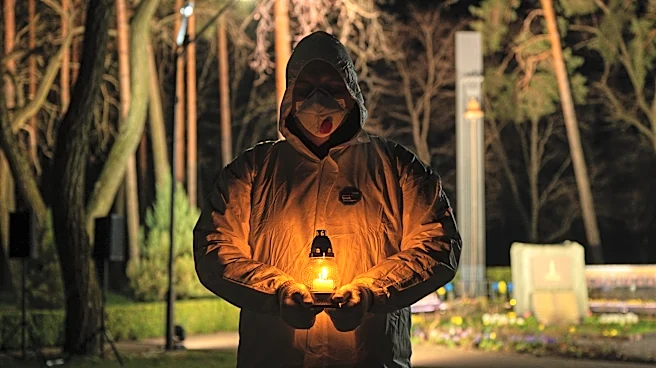
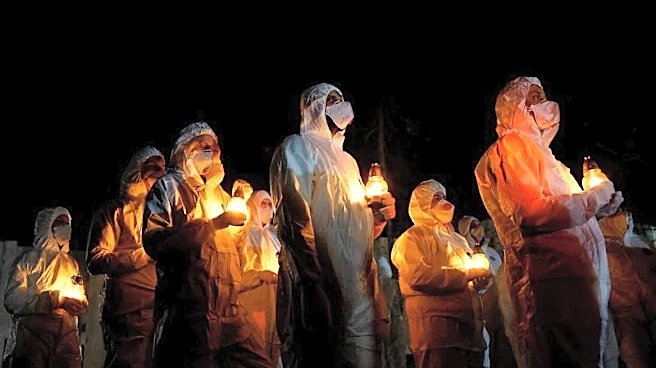
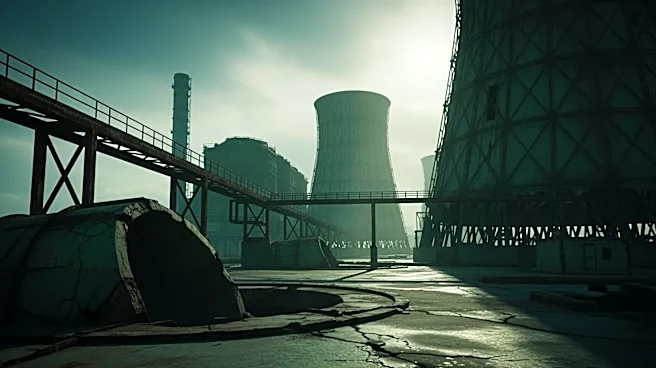
The 40th anniversary of the Chernobyl nuclear disaster is marked by renewed fears over nuclear safety in Ukraine, exacerbated by the ongoing conflict with Russia. The Chernobyl site, which suffered a catastrophic reactor explosion in 1986, remains a symbol
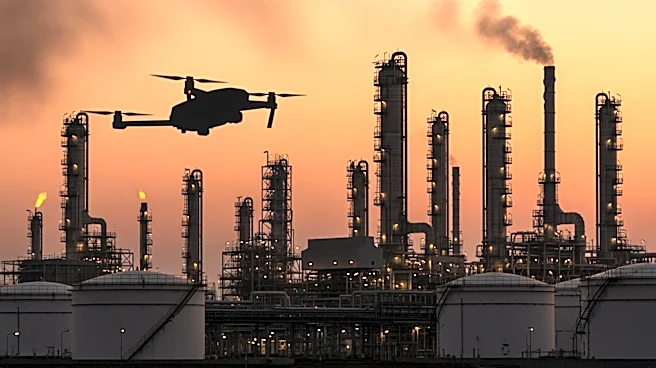
of nuclear risk. Recent reports indicate that the protective structure, known as the New Safe Confinement, was damaged by a Russian drone strike in 2025, compromising its ability to contain radiation. This incident underscores the vulnerability of nuclear facilities in conflict zones. The war has also affected other nuclear sites in Ukraine, such as the Zaporizhzhia plant, which has faced repeated power disruptions due to Russian attacks on infrastructure. These developments have raised alarms about the potential for another nuclear disaster, with significant implications for Ukraine and Europe.
Why It's Important?
The situation in Ukraine highlights the critical intersection of nuclear safety and geopolitical conflict. The damage to the Chernobyl containment structure and the ongoing threats to other nuclear facilities pose significant risks not only to Ukraine but also to neighboring countries. The reliance on nuclear power for electricity in Ukraine, especially amid infrastructure attacks, increases the stakes. Any failure in nuclear safety could lead to widespread radioactive contamination, affecting public health, agriculture, and the environment across Europe. The conflict has also reignited debates about nuclear energy's role in national security and energy independence, prompting calls for enhanced international cooperation and safety measures.
What's Next?
The immediate priority is to assess and repair the damage to the Chernobyl containment structure, a task complicated by the ongoing conflict. International organizations, including the International Atomic Energy Agency, are likely to play a role in monitoring and advising on safety measures. Ukraine's government may seek additional international support to secure its nuclear facilities and ensure the safety of its energy infrastructure. The broader geopolitical tensions suggest that nuclear safety will remain a critical issue, with potential implications for international nuclear policy and energy strategies.
Beyond the Headlines
The Chernobyl anniversary serves as a reminder of the long-term consequences of nuclear disasters and the importance of robust safety protocols. The conflict in Ukraine has highlighted the vulnerability of nuclear sites in war zones, raising ethical and legal questions about the protection of such facilities. The situation may influence future international agreements on nuclear safety and conflict resolution, emphasizing the need for global cooperation to prevent similar crises. Additionally, the reliance on nuclear power in conflict-affected regions may prompt a reevaluation of energy policies and the pursuit of alternative energy sources.