






What's Happening?
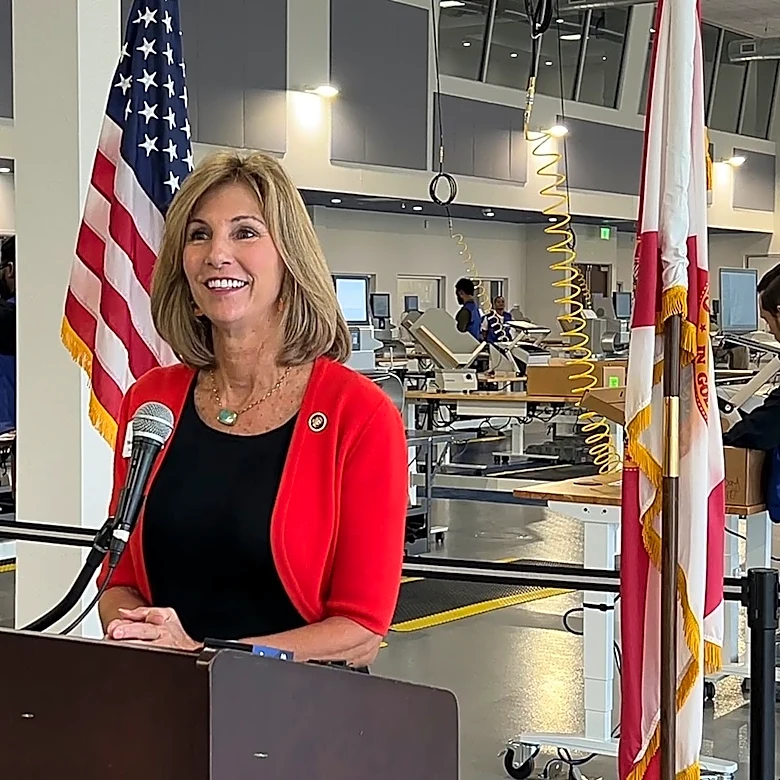
Representatives Kat Cammack of Florida and Paul Tonko of New York have introduced H.R. 10611, a bill aimed at modernizing USDA regulations for the international movement of competition horses. The proposed legislation seeks to replace current quarantine
protocols with a risk-based framework, establishing new systems for identification, traceability, and biosecurity. This initiative is designed to reduce logistical barriers for athletes and owners who travel with horses internationally, while simultaneously ensuring strict health safety standards. The bill is supported by key industry organizations, including the American Horse Council and The Jockey Club, and aims to streamline the process of moving horses through U.S. ports of entry by creating a science-based approach to disease prevention.
Why It's Important?
This legislation holds significant importance for the U.S. equestrian industry and international sports. By modernizing USDA regulations, the bill aims to harmonize international competition standards with domestic animal health safeguards, making it easier for American athletes and owners to participate in global events and for international competitors to enter the U.S. The current quarantine protocols can be cumbersome and costly, creating bottlenecks that hinder the efficient movement of high-value competition horses. A risk-based system, focusing on identification, traceability, and biosecurity, could lead to faster processing times and more predictable entry procedures, benefiting horse owners, competition organizers, and the broader equine economy. This move reflects a broader trend towards updating agricultural and sporting regulations to meet global standards, balancing animal health security with the demands of international sport.
What's Next?
The bill, H.R. 10611, will proceed through the legislative process, including committee hearings where industry participants and stakeholders will likely monitor its progress. If enacted, the USDA will be tasked with developing and implementing the new risk-based framework, which will involve creating detailed regulations for identification, traceability, and biosecurity systems. Horse owners and competition organizers should anticipate changes in how horses are processed at ports of entry, potentially leading to more efficient and less burdensome travel. The success of this legislation will depend on the USDA's ability to create a science-based framework that effectively maintains disease prevention while facilitating international participation. Industry groups will likely continue to advocate for its passage and work with regulators during the implementation phase.
Beyond the Headlines
Beyond the immediate benefits of streamlined travel for competition horses, this legislation touches upon broader themes of international cooperation and the evolving nature of animal health regulations. The shift from blanket quarantine protocols to a risk-based approach signifies a more sophisticated understanding of disease management in a globalized world. It acknowledges that modern veterinary science and technology can offer more targeted and efficient ways to prevent the spread of diseases without resorting to overly restrictive measures. This could serve as a model for other sectors dealing with the international movement of live animals, promoting a more science-driven and less bureaucratic approach to biosecurity. Furthermore, the collaboration between lawmakers and industry groups highlights the importance of stakeholder engagement in crafting effective and practical legislation that supports both economic activity and public welfare.