








What's Happening?
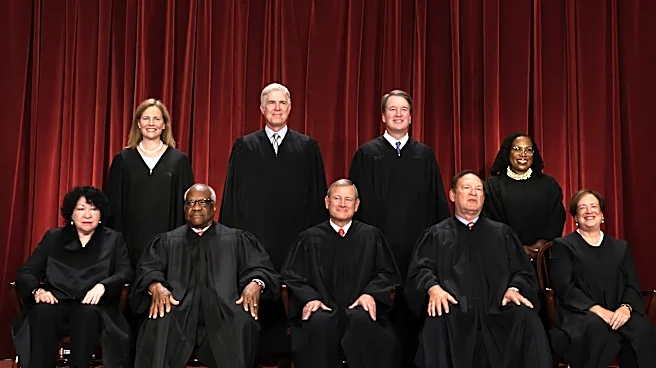
The U.S. Supreme Court has ruled that constitutional privacy protections apply to cellphone location data, marking a significant decision in the case of a bank robber identified through a geofence warrant. Justice Elena Kagan, writing for the majority,
emphasized that cellphone users do not forfeit their privacy rights by opting into location services. The ruling stems from a case involving Okello Chatrie, whose location data was used to link him to a bank robbery. The court's decision highlights the ongoing challenge of applying 18th-century constitutional principles to modern technology.
Why It's Important?
This ruling is a landmark decision in the realm of digital privacy, setting a precedent for how location data can be used by law enforcement. It underscores the need to balance privacy rights with the demands of modern policing. The decision could impact how geofence warrants are issued and used, potentially leading to stricter guidelines and limitations. This case also reflects broader societal concerns about privacy in the digital age, as individuals increasingly rely on technology that tracks their movements.
What's Next?
The case has been sent back to a lower court for further proceedings, which will likely involve additional scrutiny of geofence warrants and their compliance with the Fourth Amendment. Legal experts and privacy advocates will be closely watching the developments, as the outcome could influence future cases and legislation related to digital privacy. The decision may also prompt tech companies to reevaluate their data collection practices and user agreements to better protect consumer privacy.