



What's Happening?
President Trump has reignited his interest in acquiring Greenland, a Danish territory strategically located between the United States and Russia. This renewed push comes as Trump emphasized the geopolitical importance of Greenland, suggesting that if
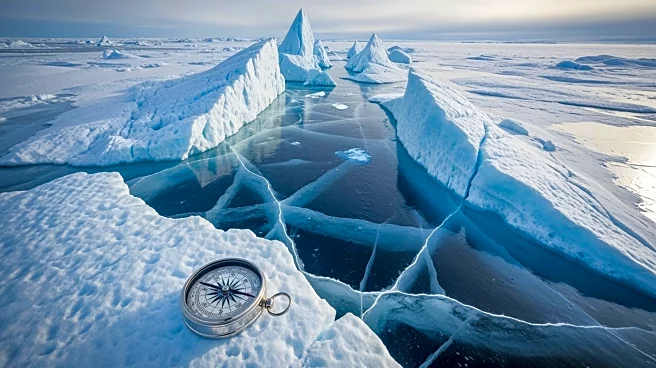
the U.S. does not secure it, other powers like Russia or China might. Trump made these comments aboard Air Force One, highlighting Greenland's minimal defense capabilities compared to the military presence of Russia and China in the region. Greenland, with a population of around 56,000, is the least densely populated island globally and is currently a self-governing body under Denmark. The island's vast, untouched landscapes have made it a popular destination for adventure tourism, which is a growing sector in Greenland's economy.
Why It's Important?
The renewed interest from President Trump in acquiring Greenland underscores the island's strategic importance in global geopolitics. Greenland's location makes it a valuable asset for military and economic reasons, particularly as Arctic routes become more navigable due to climate change. The potential U.S. acquisition could significantly alter the balance of power in the Arctic region, affecting international relations with Denmark and other Arctic nations. For Greenland, this interest could accelerate its economic diversification efforts, particularly in tourism, which is expected to grow significantly. However, it also raises concerns about sovereignty and the implications of increased foreign influence on local governance and culture.
What's Next?
If President Trump's interest in Greenland continues, it could lead to diplomatic discussions between the U.S. and Denmark. The Danish government has previously rejected the idea of selling Greenland, so any future negotiations would require careful diplomatic engagement. Meanwhile, Greenland is likely to continue its efforts to expand its tourism infrastructure, with new international airports and increased cruise tourism. The island's government aims to boost tourism's contribution to its economy, which could be influenced by the geopolitical attention it is receiving. Stakeholders in Greenland's tourism industry may need to navigate the potential impacts of increased international interest and investment.
Beyond the Headlines
The situation with Greenland highlights broader themes of territorial acquisition and sovereignty in the modern geopolitical landscape. It raises ethical questions about the rights of small, self-governing territories in the face of interest from larger powers. The focus on Greenland also brings attention to the Arctic region's growing importance due to climate change, as melting ice opens new shipping routes and access to natural resources. This could lead to increased international competition and collaboration in the Arctic, with implications for environmental policies and indigenous communities.