





What's Happening?
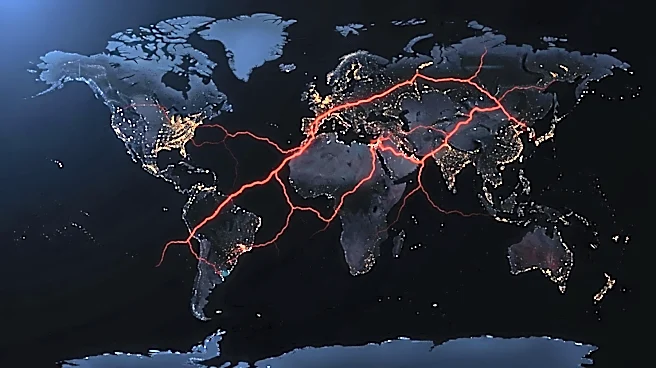
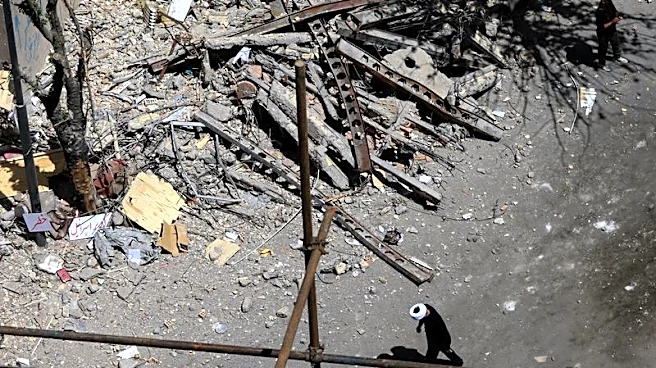
The International Monetary Fund (IMF) has issued a warning about the potential for a global recession if the ongoing conflict involving Iran continues to escalate. The IMF's latest World Economic Outlook report highlights the significant impact of the conflict on global energy
prices, with oil prices potentially averaging $110 per barrel in 2026 and $125 in 2027. This situation could lead to increased inflation expectations and necessitate more stringent measures by central banks to control inflation. The IMF presented three scenarios: a 'reference scenario' with a short-lived conflict, an 'adverse scenario' with prolonged conflict, and a 'severe scenario' with extended conflict leading to major financial disruptions. The most optimistic scenario predicts a 3.1% global GDP growth for 2026, while the severe scenario could see growth fall to 2.0%, indicating a close call for a global recession.
Why It's Important?
The potential for a global recession due to the Iran conflict has significant implications for the global economy, particularly for countries heavily reliant on oil imports. The increase in energy prices could lead to widespread inflation, affecting consumer prices and wage demands. Central banks may need to implement tighter monetary policies, which could slow economic growth further. Emerging markets and developing economies are expected to be hit hardest, with growth projections falling significantly. The situation underscores the interconnectedness of global economies and the potential for regional conflicts to have far-reaching economic consequences.
What's Next?
If the conflict continues, central banks may need to adjust their monetary policies to address rising inflation. Governments might consider implementing fiscal measures to mitigate the impact of higher energy prices, though the IMF cautions against such actions due to existing budget deficits and public debt. The global economic community will likely monitor the situation closely, with potential adjustments to economic forecasts and policies depending on the conflict's progression.
Beyond the Headlines
The ongoing conflict and its economic repercussions highlight the vulnerability of global supply chains and the importance of energy security. The situation may prompt countries to reassess their energy policies and explore alternative energy sources to reduce dependency on oil imports. Additionally, the conflict could influence geopolitical alliances and trade relationships, as countries navigate the economic and political challenges posed by the situation.