






What's Happening?
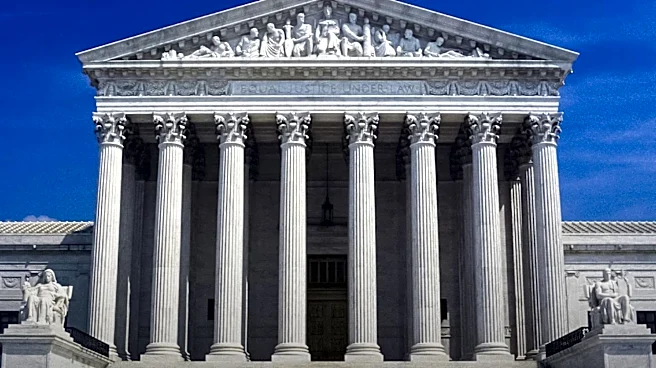
The Supreme Court is currently hearing arguments in the case of Nielsen v. Watanabe, which centers on an inmate, Kekai Watanabe, who alleges that a prison paramedic, Francis Nielsen, violated his Eighth Amendment rights by being deliberately indifferent
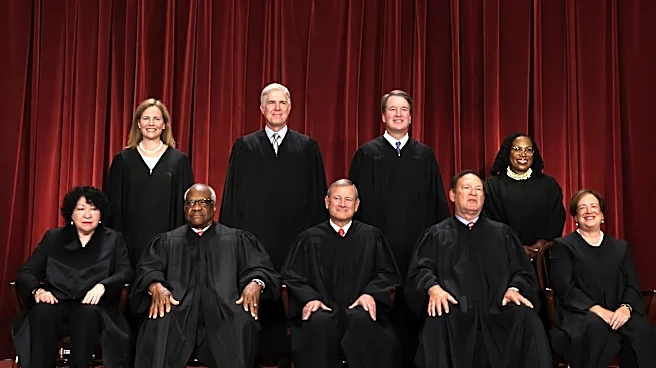
to his serious medical needs. Watanabe sustained severe injuries in a prison fight and claims he received inadequate medical care, leading to a fractured coccyx and ongoing pain. The district court initially dismissed his claim, but the U.S. Court of Appeals for the 9th Circuit reversed this decision, stating that Watanabe's claim was similar to the precedent set in Carlson v. Green. During oral arguments, Justice Amy Coney Barrett expressed concern about the legal recourse available to inmates in such situations, particularly in cases of severe medical negligence or death. She questioned whether injunctive relief or claims under the Federal Tort Claims Act (FTCA) would provide sufficient remedies if Bivens claims were limited or overruled. Lucas Walker, representing Nielsen, argued that Bivens claims are disfavored and that Watanabe had other avenues for relief, such as administrative and injunctive measures.
Why It's Important?
This case is significant because it could redefine the scope of Bivens claims, which allow individuals to sue federal officials for constitutional rights violations. A ruling against Watanabe could severely limit the ability of inmates to seek monetary damages for alleged medical negligence by federal prison officials. This would shift the burden of accountability and potentially leave inmates with fewer effective legal avenues to address constitutional violations, particularly in cases where injunctive relief might be insufficient or where the Federal Tort Claims Act does not fully cover the damages. The outcome could impact prison administration practices and the legal protections afforded to incarcerated individuals, potentially reducing the deterrent effect of personal liability for federal officers. The discussion among the justices highlights a broader debate about judicial overreach versus legislative responsibility in creating remedies for constitutional infringements.
What's Next?
A decision in Nielsen v. Watanabe is anticipated by late June or early July. The Supreme Court's ruling will clarify the availability of Bivens claims for inmates alleging medical negligence and could have significant implications for future litigation against federal officials. If the Court limits or overrules Carlson v. Green, it would likely prompt a reevaluation of legal strategies for inmate rights advocates and potentially lead to increased reliance on other legal avenues, such as the Federal Tort Claims Act or administrative remedies. The outcome will also influence how federal prisons manage medical care and accountability for their staff. The debate among the justices suggests a potential shift towards narrowing the scope of judicially created remedies for constitutional violations, emphasizing the role of Congress in establishing such mechanisms.
Beyond the Headlines
The underlying tension in this case extends beyond inmate rights to the fundamental balance of power between the judiciary and the legislature in defining remedies for constitutional violations. The Supreme Court's historical caution against extending Bivens remedies reflects a concern about judicial activism and the separation of powers. If the Court further restricts Bivens, it could be seen as an invitation for Congress to legislate more comprehensively on federal officer accountability, particularly within the prison system. However, a lack of congressional action could leave a gap in legal recourse for vulnerable populations. The case also touches on the ethical dimensions of medical care in correctional facilities, raising questions about the standard of care and the mechanisms for ensuring accountability when that standard is not met, especially for individuals who are entirely dependent on the state for their well-being.