



What's Happening?
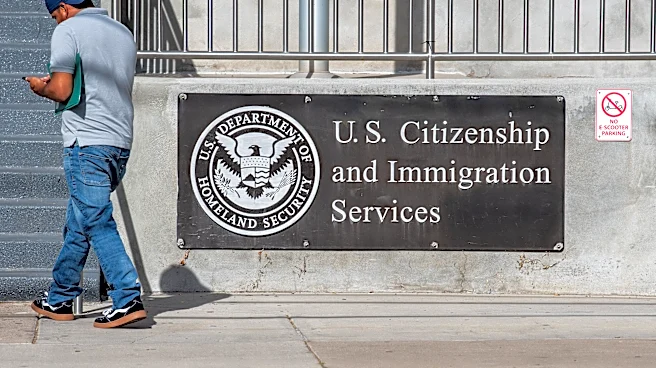
A federal judge has overturned new restrictions imposed by the Department of Homeland Security (DHS) that sought to limit the stay of F-1 foreign students in the U.S. to four years. U.S. District Court for the District of Massachusetts Judge F. Dennis
Saylor ruled that the DHS rule was contrary to statutory authority and failed to consider less burdensome alternatives. The overturned regulations aimed to replace the long-standing 'duration of status' framework, which allowed international students to remain in the U.S. while pursuing their degrees, with a system requiring extensions after four years. Judge Saylor had previously issued an order in September to stop the regulations from taking effect, citing DHS's failure to demonstrate a rational connection between the restrictions and their stated objectives.
Why It's Important?
This judicial decision is significant for international education and the U.S. economy. The overturned DHS rule would have created considerable uncertainty and administrative burden for F-1 student visa holders and J-1 exchange visitors, potentially deterring international students from choosing U.S. institutions. International students contribute billions of dollars to the U.S. economy annually through tuition, living expenses, and related spending, and they often fill critical roles in STEM fields and research. The ruling ensures the continuation of a more stable and predictable environment for international students, which is crucial for maintaining the U.S.'s competitiveness as a global leader in higher education and innovation. It also underscores the judiciary's role in scrutinizing executive agency actions and ensuring they adhere to legal and rational standards.
What's Next?
With the DHS restrictions overturned, the 'duration of status' framework for F-1 foreign students will continue, allowing them to remain in the U.S. as long as they are making progress toward their degrees. This provides stability for current and prospective international students and the universities that host them. The ruling may also influence future attempts by DHS or other agencies to implement similar restrictions on foreign students or other visa categories. While the immediate threat of the four-year limit is removed, the broader debate over immigration policy and its impact on education and the economy is likely to continue. Universities and international student organizations will likely welcome this decision, as it alleviates a significant source of anxiety and administrative complexity.
Beyond the Headlines
This case highlights the tension between national security concerns and the economic and cultural benefits of international exchange. The DHS's attempt to impose stricter limits on student visas was ostensibly aimed at rooting out fraud, but the court found insufficient justification for such a broad and disruptive measure. The decision reinforces the importance of evidence-based policymaking and the need for government agencies to demonstrate a clear and rational basis for their regulations. Ethically, the ruling supports the principle of providing a clear and stable pathway for individuals pursuing education, rather than subjecting them to arbitrary or overly burdensome administrative hurdles. It also underscores the value of international students not just as economic contributors but as vital components of academic and research communities, fostering global understanding and innovation.