



What's Happening?
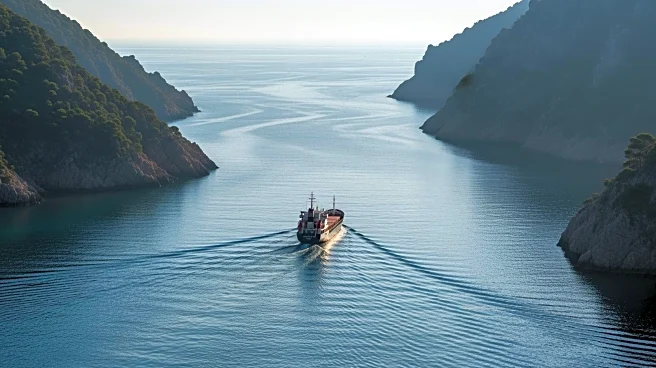
The Strait of Hormuz has seen a significant decline in ship traffic since the onset of the conflict in Iran, with only 92 ships passing through in the first 15 days of the war. This reduction contrasts sharply with pre-war levels, where more vessels transited
the strait daily. The Trump administration has been actively working to reopen the waterway, but efforts have yet to yield substantial results. President Trump has made various statements regarding the situation, suggesting military intervention and urging allies to assist in policing the area. The strait, crucial for global oil supplies, has seen oil prices rise to around $100 per barrel, affecting global markets.
Why It's Important?
The decline in ship traffic through the Strait of Hormuz underscores the impact of geopolitical tensions on global trade and energy supplies. The strait's closure has contributed to rising oil prices, affecting economies worldwide. The Trump administration's shifting strategies highlight the complexities of international diplomacy and the challenges in securing critical trade routes. The situation has implications for global energy security, as the strait is a vital chokepoint for oil and gas transport. The ongoing conflict may lead to further diplomatic efforts or military interventions to stabilize the region.