






What's Happening?
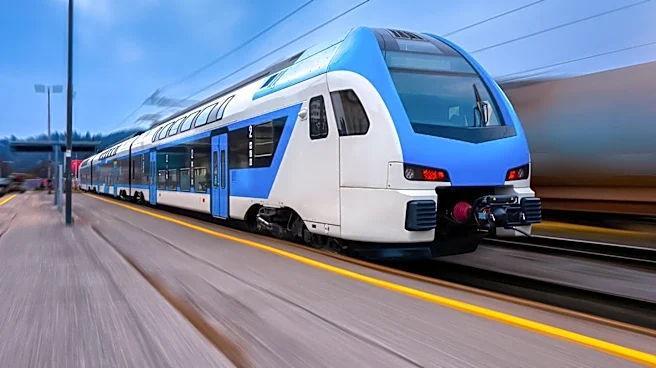
Amtrak's Acela train service provides a premium travel option for passengers commuting between Newark Liberty International Airport (EWR) and New York City's Penn Station. This service is characterized by its superior track priority and fewer stops, allowing
for a faster journey compared to other rail options. The rail segment of the trip can be completed in as little as 17 to 20 minutes under ideal conditions. However, real-world factors such as inclement weather, including nor'easters or heavy summer thunderstorms, can introduce delays of 15 to 30 minutes due to slow orders on the tracks. The Acela service is part of a two-step process for travelers, which begins with the AirTrain Newark, an automated people mover system connecting airport terminals to the Newark Airport Rail Station. From there, passengers transition to the Northeast Corridor Line, where they can choose between Amtrak's Acela or regional services, or NJ Transit.
Why It's Important?
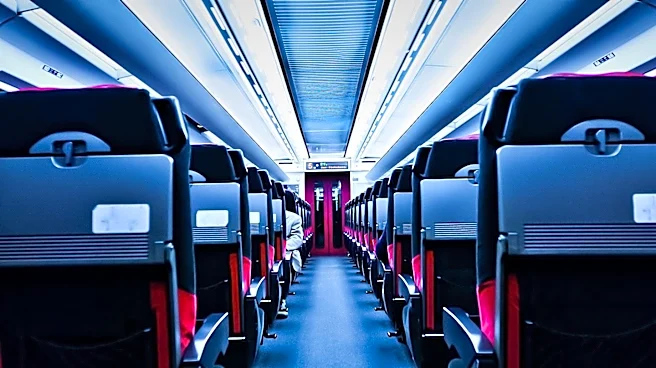
The Acela service plays a significant role in connecting a major U.S. aviation hub with a key economic center, offering a valuable option for business travelers and others prioritizing speed and comfort. While more expensive, with one-way fares often exceeding $30, the Acela's appeal lies in its enhanced amenities, including complimentary Wi-Fi and guaranteed seating, which can be crucial for productivity and peace of mind during travel. This premium offering caters to a segment of the traveling public willing to pay more for efficiency and a higher quality experience. The existence of such a service highlights the demand for diverse transportation solutions in high-traffic corridors, impacting how businesses schedule travel and how individuals perceive their commute options. The potential for weather-related delays, however, underscores the challenges in maintaining consistent travel times even with premium services, affecting planning and reliability for commuters and businesses alike.
What's Next?
Travelers utilizing the Acela service will continue to navigate the two-step process involving the AirTrain Newark and the subsequent train journey to Penn Station. Future developments may focus on mitigating the impact of weather-related delays through infrastructure improvements or advanced scheduling systems. The ongoing demand for efficient travel between Newark Airport and Penn Station suggests that premium services like Acela will remain a critical component of the region's transportation network. Passengers should continue to monitor real-time updates for potential service disruptions, especially during adverse weather conditions, to adjust their travel plans accordingly. The competitive landscape with NJ Transit also means that Amtrak will likely continue to emphasize the unique benefits of its Acela service to justify its higher price point.
Beyond the Headlines
The Acela service, while a premium offering, reflects broader trends in urban and intercity transportation, where speed, comfort, and reliability are increasingly valued. The higher cost associated with Acela tickets points to a tiered transportation system, where access to faster and more comfortable travel is often linked to economic capacity. This dynamic can influence regional economic development by facilitating quicker movement for business professionals, potentially enhancing productivity and connectivity between key commercial centers. The integration of the AirTrain with the rail services also exemplifies the complex, multi-modal approach often required to manage high-volume passenger flows in major metropolitan areas. The challenges posed by weather-induced delays highlight the inherent vulnerabilities in even advanced transportation systems, prompting ongoing discussions about resilience and infrastructure investment.