

What's Happening?
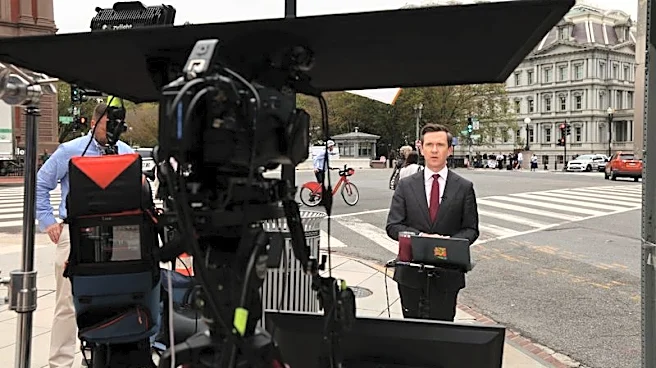
The United States has reached a historic low in press freedom, now ranking 64th globally on Reporters Without Borders’ (RSF) 2026 World Press Freedom Index. This marks a significant drop from its 57th position in 2025. RSF, an organization dedicated to defending
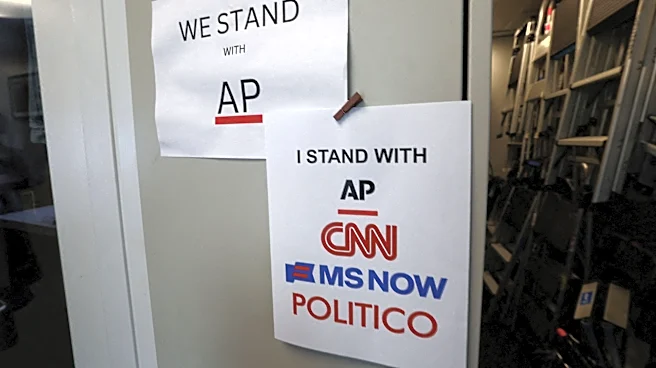
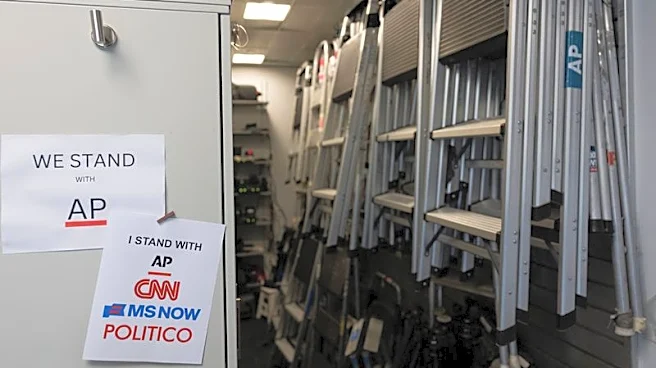
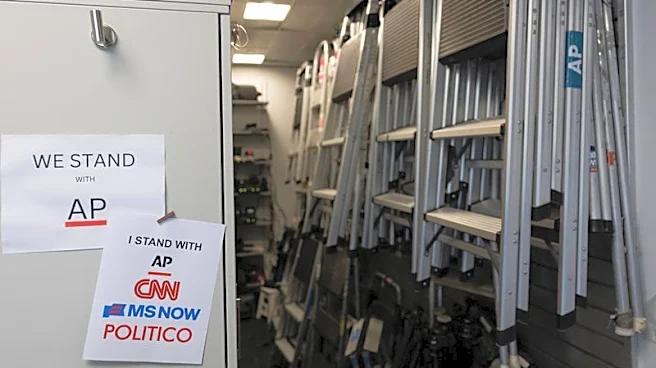
media access and journalists’ rights, attributes this decline to actions taken by President Trump. These actions include halting funding for international press freedom initiatives, filing lawsuits against media outlets he disfavored, and exerting pressure to install his allies in leadership roles within media organizations. RSF North America Director Clayton Weimers stated that President Trump's administration has waged a 'coordinated war on press freedom' since he took office, with long-lasting consequences. The report highlights a steady decline in the U.S. on the RSF Index over the past decade, with President Trump's return to the presidency exacerbating the situation.
Why It's Important?
This significant decline in U.S. press freedom is important because it undermines a cornerstone of American democracy: the free press. A lower ranking on the World Press Freedom Index can impact the U.S.'s international standing as a beacon of democratic values and free speech. The actions cited, such as defunding international press freedom efforts and suing media organizations, could set a precedent that emboldens other nations to restrict their own press. Domestically, the pressure to place political allies in media leadership positions and the use of legal action against news outlets can lead to self-censorship and a less diverse media landscape. This could limit the public's access to unbiased information, making it harder for citizens to make informed decisions and hold power accountable. The erosion of press freedom can also deter investigative journalism, which is crucial for uncovering corruption and ensuring transparency in government and business. Ultimately, a weakened press can lead to a less informed populace and a more vulnerable democratic system.
What's Next?
The continued decline in U.S. press freedom suggests potential further restrictions on media access and increased legal challenges against news organizations. Stakeholders, including press freedom advocacy groups like RSF and the International Federation of Journalists, are expected to continue to monitor and speak out against these developments. Media outlets may face ongoing pressure and potential legal battles, which could strain their resources and influence their reporting. There could be increased calls for legislative action to strengthen press protections, although the current political climate may make such efforts challenging. The public's trust in media, already a contentious issue, could further erode if perceived political interference in news organizations continues. The situation may also prompt a re-evaluation of the role of the First Amendment in protecting press freedom in the face of evolving challenges, potentially leading to new legal interpretations or precedents.
Beyond the Headlines
The deeper implications of this decline in press freedom extend beyond immediate political and legal battles. Ethically, it raises questions about the responsibility of public officials to uphold democratic principles, including the freedom of the press, even when faced with critical coverage. Culturally, a climate of hostility towards the media can foster public distrust in journalism, making society more susceptible to misinformation and propaganda. This erosion of trust can have long-term effects on civic engagement and social cohesion. Legally, the repeated use of lawsuits against media outlets, regardless of their outcome, can create a chilling effect, discouraging critical reporting and potentially leading to a more homogenized media landscape. This trend could also influence how other countries perceive and treat their own media, potentially weakening global norms around press freedom. The long-term shift could be towards a media environment where independent journalism struggles to thrive, impacting the quality of public discourse and the health of democratic institutions.