




What's Happening?
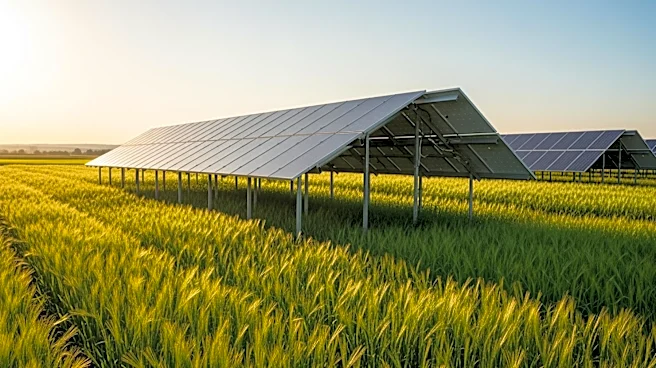
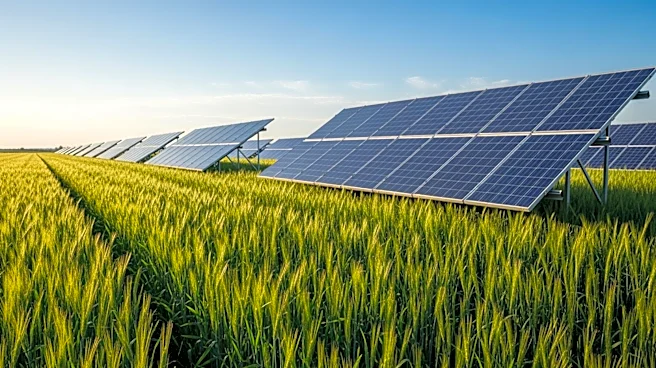
A recent study highlights the potential of agrivoltaics, which combines solar energy production with agriculture, to provide wind protection for crops. Researchers from Cornell University have found that solar panels in agrivoltaic systems can outperform
traditional windbreaks in reducing wind damage and soil erosion. This dual-use approach not only offers environmental benefits but also provides farmers with additional revenue streams. The study emphasizes the importance of optimizing solar panel design to maximize wind protection and enhance agricultural productivity.
Why It's Important?
Agrivoltaics represents a promising solution for sustainable agriculture, addressing both energy and environmental challenges. By integrating solar panels with farming, this approach can help mitigate the impacts of climate change, improve soil health, and increase crop yields. The economic benefits for farmers, including reduced energy costs and new income opportunities, make agrivoltaics an attractive option for rural communities. As the agricultural sector faces pressures from climate change and economic uncertainties, agrivoltaics could play a crucial role in ensuring food security and energy resilience.