






What's Happening?
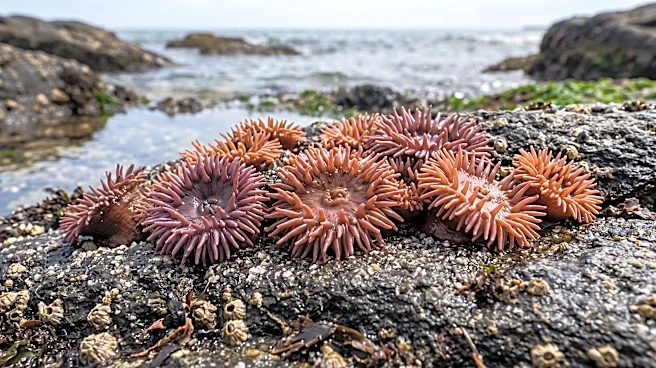
Researchers from Monmouth University have officially identified a new invasive species, the beadlet anemone (Actinia equina), along the Jersey Shore. This marks the first recorded instance of this species in the United States. The beadlet anemone is typically
native to the rocky coastlines of the British Isles and Northern Europe. Its discovery in New Jersey indicates its successful establishment in a new geographic region. The research team at Monmouth University confirmed the presence of this marine invertebrate, highlighting a significant ecological development for the U.S. coastal environment. This finding suggests that the species has adapted to the local conditions and could potentially spread further along the U.S. coastline.
Why It's Important?
The confirmation of the beadlet anemone as a new invasive species in the U.S. carries significant ecological implications. Invasive species can disrupt native ecosystems by competing with indigenous organisms for resources, altering food webs, and potentially introducing diseases. While the specific impacts of the beadlet anemone on the Jersey Shore ecosystem are yet to be fully understood, its presence could lead to changes in the local marine biodiversity. This event underscores the ongoing challenge of managing and monitoring invasive species, which often arrive through various human-mediated pathways such as shipping or aquaculture. The establishment of a new non-native species can have long-term consequences for the health and stability of coastal environments, affecting both marine life and potentially human activities like fishing and tourism.
What's Next?
Following the confirmation of the beadlet anemone, the next steps will likely involve further research and monitoring by environmental agencies and academic institutions. Scientists will aim to assess the extent of its spread, its reproductive success, and its interactions with native species along the Jersey Shore and potentially other U.S. coastal areas. Efforts may also focus on understanding the pathways through which the species arrived to inform future prevention strategies. Local and national environmental protection groups may develop management plans to mitigate potential ecological damage, which could include public awareness campaigns or targeted removal efforts if deemed necessary and feasible. The long-term goal will be to prevent further proliferation and protect the native marine ecosystems.
Beyond the Headlines
The arrival of the beadlet anemone highlights a broader global issue of species translocation driven by increased international trade and travel. This event serves as a reminder of the interconnectedness of global ecosystems and the unintended consequences of human activities. Beyond the immediate ecological concerns, the discovery could prompt a re-evaluation of existing biosecurity measures at U.S. ports and coastal areas. It also raises questions about the resilience of native ecosystems to new biological pressures and the potential for climate change to facilitate the establishment of non-native species in new habitats. The incident underscores the need for continuous vigilance and adaptive management strategies to protect biodiversity and maintain ecological balance in a rapidly changing world.