





What's Happening?
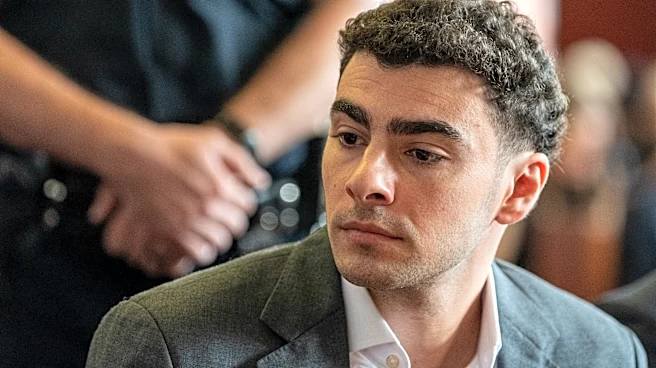
Following an attack at Central Synagogue in Manhattan, where Larry Montes, 46, was charged with hate crimes for disrupting a Shabbat service, striking a congregant, and spitting on a security guard, some online influencers and critics have attributed
the incident to Mayor Zohran Mamdani's rhetoric against Israel. Ofir Akunis, consul general of Israel in New York, posted on X that the attack was a 'direct result of Mayor Mamdani’s sustained campaign of incitement.' However, details emerging about Montes complicate this conclusion. A Forward analysis of Montes's social media and statements from his family indicate he was a pro-Israel Republican who desired to convert to Judaism. Montes had previously reposted videos critical of Mamdani and expressed pro-Israel sentiments. After his arrest, Montes reportedly called the congregants 'fake Jews,' suggesting a possible prejudice against Reform Judaism. Mental health issues may also have played a role, as Montes had a history of arrests for violent robberies and was known as an 'emotionally disturbed person.'
Why It's Important?
This incident highlights the complex and often misattributed nature of antisemitism and hate crimes, particularly in a highly charged political environment. The rush to blame Mayor Mamdani, despite evidence suggesting the attacker held pro-Israel views and was critical of the mayor, underscores how political narratives can quickly overshadow factual details. This misattribution can hinder effective responses to antisemitism by diverting attention from the true motivations of perpetrators and the diverse forms that prejudice can take. The case also reveals the challenges in distinguishing between genuine political criticism and rhetoric that incites hatred, especially when mental health issues are involved. The conflation of the attacker's worldview with Mamdani's, as noted by Amy Spitalnick, chief executive of the Jewish Council for Public Affairs, 'harms the fight against antisemitism' by oversimplifying its causes. This situation also demonstrates how events in New York can be leveraged for political purposes, even in international contexts, as Prime Minister Benjamin Netanyahu's campaign has used Mamdani's rhetoric to rally support in Israel.
What's Next?
The legal proceedings against Larry Montes will continue, potentially revealing more about his motivations and mental state. The ongoing public discourse will likely continue to debate the role of political rhetoric in fostering an environment where hate crimes can occur, even as the specific facts of this case challenge easy conclusions. Jewish leaders and local politicians, such as Micah Lasher, have called for a lowering of the political temperature and a more nuanced understanding of the increase in violence against the Jewish community. This incident may prompt further discussions within the community about the various forms of antisemitism, including those that may stem from within or be directed at specific Jewish denominations. The political implications, particularly for Mayor Mamdani and Prime Minister Netanyahu, are likely to persist, with both sides potentially using the incident to bolster their respective narratives. The broader challenge remains to address antisemitism effectively while avoiding politically motivated mischaracterizations that can obscure the true nature of such incidents.
Beyond the Headlines
The Central Synagogue attack and its aftermath reveal deeper societal issues concerning the weaponization of identity politics and the erosion of nuanced public discourse. The immediate attribution of blame to Mayor Mamdani, despite contradictory evidence, exemplifies a trend where complex social problems are reduced to simplistic political narratives. This not only hinders genuine efforts to combat hate but also risks alienating communities and exacerbating divisions. The attacker's 'deeply disturbing worldview,' which combined elements of philosemitism and antisemitism, underscores the psychological complexities that can drive hate crimes, moving beyond straightforward ideological motivations. This case challenges the public to look beyond superficial political alignments and consider the multifaceted nature of prejudice, mental health, and individual pathologies. Furthermore, the use of this incident in Israeli election campaigns highlights how local events can be co-opted into international political struggles, demonstrating the interconnectedness of global and local narratives. The incident serves as a stark reminder of the need for critical thinking and fact-based analysis in an era of rapid information dissemination and political polarization, especially when dealing with sensitive issues like religious identity and hate crimes.