
What's Happening?
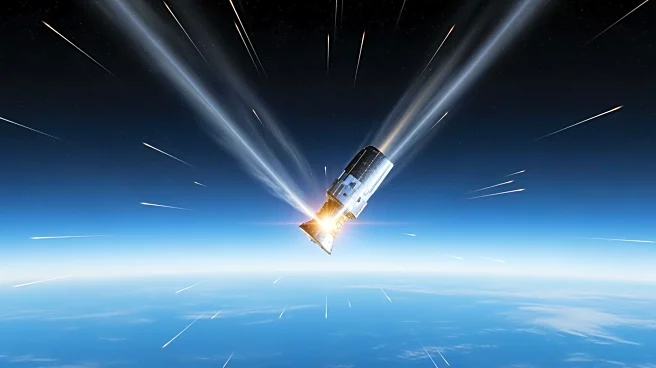
A satellite from SpaceX's Starlink constellation has experienced an orbital anomaly, leading to its eventual descent towards Earth. The incident occurred on December 17, when the satellite lost communication
at an altitude of 418 kilometers. SpaceX reported that the satellite's propulsion tank was likely damaged, causing a venting of the propellant tank and a rapid descent. Despite the anomaly, SpaceX, in collaboration with NASA and the US Space Force, is tracking the satellite's fragments, which are expected to disintegrate completely in the atmosphere within weeks. The satellite's trajectory is below the International Space Station, posing no threat to its crew or operations.
Why It's Important?
This incident underscores the challenges and risks associated with managing large satellite constellations like Starlink, which currently accounts for a significant portion of all operational satellites. The event highlights the importance of space safety and the need for robust systems to prevent and manage such anomalies. SpaceX's proactive measures, including software updates and collision avoidance maneuvers, demonstrate a commitment to mitigating space debris risks. However, the situation also raises broader concerns about the sustainability of space operations as the number of satellites continues to grow, potentially increasing the risk of collisions and space debris.