


What's Happening?
Ofelia Giselle Torres Hidalgo, a 16-year-old from Chicago, passed away from stage 4 alveolar rhabdomyosarcoma, a rare and aggressive form of cancer. Her death comes shortly after an immigration judge ruled that her father, Ruben Torres Maldonado, could
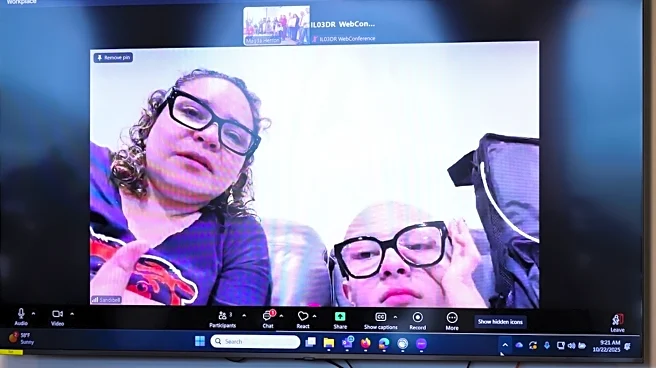
receive 'cancellation of removal' due to the hardships his deportation would impose on his U.S.-born children. Torres Maldonado, a painter and home renovator, was detained in October during an immigration crackdown known as 'Operation Midway Blitz.' Despite his detention, a judge later allowed his release on a $2,000 bond, citing his lack of criminal history. Ofelia had been actively advocating for her father's release, even appearing via Zoom at a recent hearing. Her family has expressed their grief and highlighted her bravery in the face of her father's legal challenges.
Why It's Important?
This case underscores the human impact of immigration enforcement policies in the U.S., particularly on families with mixed immigration status. Ofelia's story highlights the emotional and physical toll such legal battles can have on individuals, especially minors. The ruling in favor of Torres Maldonado provides a potential pathway to legal residency, reflecting the complexities and potential for relief within the immigration system. This case may influence public opinion and policy discussions regarding the treatment of undocumented immigrants with U.S.-born children, emphasizing the need for compassionate and humane immigration policies.
What's Next?
Following the judge's ruling, Torres Maldonado may pursue legal permanent residency, which could eventually lead to U.S. citizenship. The case may prompt further legal and public scrutiny of immigration enforcement practices, particularly those involving family separations. Advocacy groups and legal representatives might use this case to push for reforms that consider the welfare of U.S.-born children in deportation proceedings. The family's situation could also inspire increased community support and advocacy for immigrant rights.
Beyond the Headlines
Ofelia's story brings attention to the broader ethical and social implications of immigration enforcement. It raises questions about the balance between law enforcement and humanitarian considerations, especially in cases involving vulnerable family members. The emotional narrative of a young girl fighting for her father's freedom while battling a terminal illness may resonate with the public, potentially influencing cultural perceptions of immigrants and their families. This case could contribute to a shift in how immigration issues are discussed and addressed in the U.S.