



What's Happening?
On February 4, the Strategic Farming: Let's Talk Crops program featured a discussion on the critical role of pollinators in agriculture. Dan Cariveau, an Associate Professor with the University of Minnesota Bee Lab, and Claire LaCanne, a UMN Extension
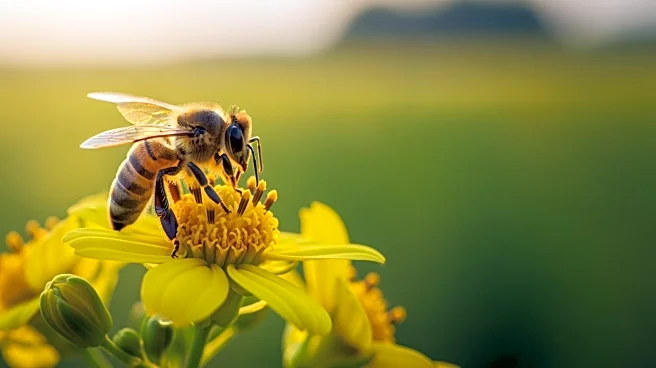
educator, highlighted the importance of pollinators in food production and ecosystem health. According to the USDA, over 80% of the world's flowering plants require pollinators to reproduce, making them essential for food production. The discussion emphasized the alarming decline in bee populations and other pollinators across North America. Cariveau noted that bees have been around for millions of years, with DNA evidence dating back 123 million years. The program underscored the need to promote pollinator-friendly practices in agricultural landscapes to support biodiversity and ecological services valued at $200 billion annually.
Why It's Important?
The decline in pollinator populations poses a significant threat to agriculture and food security in the U.S. and globally. Pollinators are vital for the reproduction of many crops, and their decline could lead to reduced crop yields and increased food prices. The discussion by University of Minnesota experts highlights the need for immediate action to protect these species. Promoting pollinator-friendly practices can enhance biodiversity, improve soil health, and maintain water quality. The economic value of pollinators is substantial, and their loss could have far-reaching impacts on the agricultural industry and the economy. By raising awareness and implementing conservation strategies, stakeholders can help mitigate the risks associated with pollinator decline.