




What's Happening?
Secretary of State Marco Rubio has significantly increased his support in the race for the 2028 Republican presidential nomination, according to a new Emerson College Polling survey. Rubio is now nearly tied with Vice President JD Vance, with Vance holding
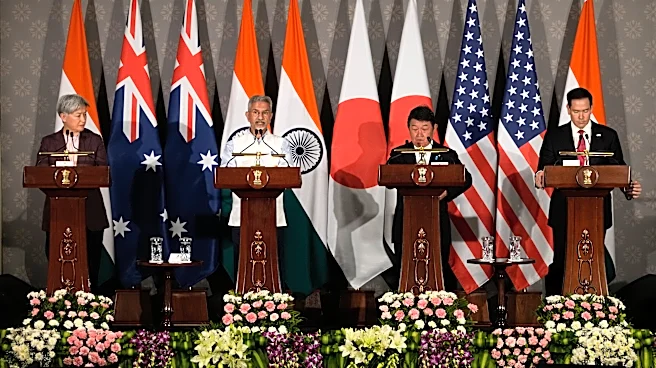
36 percent support and Rubio close behind at 35 percent among likely Republican primary voters. This marks a dramatic rise for Rubio, who has gained 26 points since August 2025. The poll highlights a shifting Republican field, with Rubio's increased visibility on the global stage, including a recent diplomatic visit to India, contributing to his rising profile. The survey also reveals demographic splits, with Rubio leading among older voters and Vance ahead among younger Republicans.
Why It's Important?
The surge in support for Marco Rubio indicates a significant shift in the Republican primary landscape, potentially altering the dynamics of the 2028 presidential race. Rubio's rise challenges what was once a dominant lead by JD Vance, suggesting a more competitive and uncertain contest. This development could influence the strategies of other potential candidates and reshape the priorities of the Republican electorate. Additionally, the poll reflects broader voter dissatisfaction with both major parties, as majorities express concerns about the direction of the Democratic and Republican parties. The economy remains a top concern for voters, which could impact policy discussions and campaign strategies leading up to the election.
What's Next?
As the 2028 Republican primary race heats up, both Marco Rubio and JD Vance are likely to intensify their campaign efforts to consolidate support among key voter demographics. Rubio's recent gains suggest he may continue to leverage his foreign policy experience and Cuban American heritage to appeal to a broader base. Meanwhile, the Democratic primary remains fragmented, with no clear frontrunner, which could lead to a prolonged and competitive nomination process. The evolving political landscape will require candidates from both parties to address voter concerns about the economy and foreign policy, particularly regarding U.S. intervention in Cuba.