






What's Happening?
North Carolina health officials have reported an increase of 23 cyclosporiasis cases, bringing the total to 929, with 32 hospitalizations since May. The majority of these cases are concentrated in Wake County. Cyclosporiasis is an intestinal illness caused
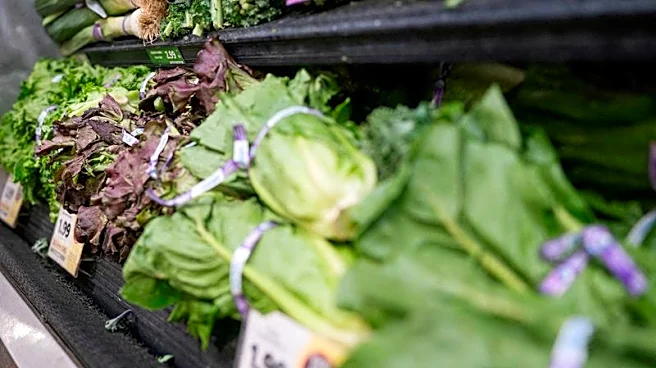
by the parasite Cyclospora cayetanensis, typically contracted by consuming contaminated food or water, often linked to produce like parsley, cilantro, and lettuce. This outbreak is influencing consumer behavior, with some North Carolina farmers experiencing a decline in patrons at local farmers' markets. The North Carolina Growers Association, representing over 700 farms, notes that farmers are seeing fewer customers, particularly for produce linked to the outbreak. Conversely, the State Farmer's Market in the Triangle area is observing increased attendance, though this coincides with its peak season, and market managers suggest consumers are becoming more mindful of food sourcing.
Why It's Important?
The ongoing cyclosporiasis outbreak in North Carolina carries significant public health and economic implications. The rising number of cases underscores a public health challenge, requiring continued vigilance from health authorities and potentially impacting healthcare resources due to hospitalizations. Economically, the outbreak is creating a mixed impact on the state's agricultural sector. While some larger markets might see increased traffic from consumers seeking locally sourced produce, smaller local farmers' markets are experiencing reduced sales, threatening the livelihoods of many farmers. This situation highlights the vulnerability of agricultural businesses to foodborne illness outbreaks and the critical importance of consumer confidence in food safety. The shift in consumer behavior towards more mindful sourcing could also accelerate a broader trend towards local food systems, but it also places a burden on farmers to clearly differentiate their products from those implicated in outbreaks.
What's Next?
North Carolina health officials will continue to monitor and report on the cyclosporiasis outbreak, providing updates on case numbers and affected areas. Public health campaigns may intensify to educate residents on safe food handling practices and the importance of washing produce thoroughly. For the agricultural sector, the North Carolina Growers Association may explore options for supporting affected farmers, potentially including seeking emergency aid if sales continue to decline significantly. Farmers will likely focus on enhancing their marketing strategies to emphasize the safety and local origin of their produce, aiming to rebuild consumer trust. Agribusiness and marketing specialists will continue to advise farmers on how to distinguish their products from the broader supply chain implicated in the outbreak. Consumers are expected to maintain increased scrutiny over food origins, potentially leading to a sustained preference for locally sourced produce in areas with well-established local food systems.
Beyond the Headlines
The cyclosporiasis outbreak in North Carolina reveals deeper issues concerning food supply chains, consumer trust, and the resilience of local economies. The fact that the outbreak is linked to produce, and that some consumers are now more actively seeking local options, highlights a growing awareness of the complexities and potential vulnerabilities of large-scale food distribution. This could foster a stronger demand for transparency in food sourcing and production, pushing for more stringent safety standards across the industry. Furthermore, the economic strain on local farmers underscores the delicate balance of agricultural ecosystems and the need for robust support systems during crises. The outbreak also brings to light the broader challenge of foodborne illnesses in a globalized food system, where contamination can quickly spread and impact diverse communities. This event may serve as a catalyst for long-term changes in how food is produced, distributed, and consumed, emphasizing local resilience and public health safeguards.