





What's Happening?
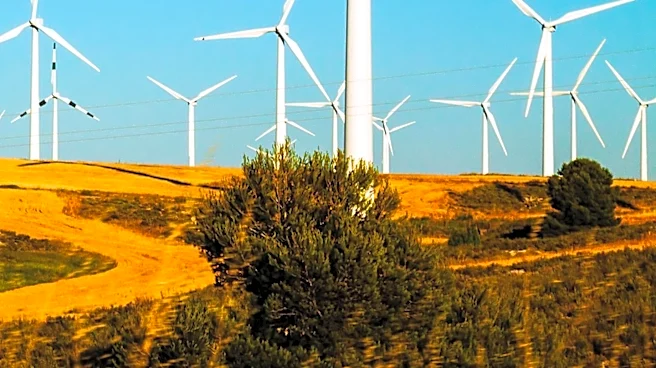
Egypt has signed an agreement with China's SANY Renewable Energy to develop a 2,000-megawatt wind project in the Gulf of Suez, which includes the establishment of Egypt's first wind turbine manufacturing plant. This initiative aims to integrate the project into
the national grid within 23 months of final agreements and position Egypt as a hub for renewable energy equipment manufacturing and export across Africa and the Middle East. Energy experts view this project as a potential model for other African nations struggling to translate renewable energy ambitions into functional infrastructure. The project emphasizes scale, local manufacturing, and technology transfer, contrasting with past challenges in countries like Nigeria, where a 10-megawatt wind farm took nearly two decades to become operational.
Why It's Important?
Egypt's wind power initiative holds significant implications for the U.S. and global renewable energy landscape, particularly in the context of African development. For the U.S., this project highlights the growing influence of China in critical infrastructure development in Africa, potentially impacting U.S. strategic interests and economic partnerships on the continent. The emphasis on local manufacturing and technology transfer in Egypt's deal could set a new standard for renewable energy projects in Africa, challenging traditional models that rely heavily on imported equipment. This approach could foster greater energy independence and economic growth in African nations, but also raises questions about the extent of genuine technology transfer versus continued dependence on foreign manufacturers. The success of Egypt's model could influence U.S. foreign aid and investment strategies in renewable energy, pushing for more localized and sustainable development approaches.
What's Next?
The Egyptian wind project is still in its early stages, with the next phase involving the finalization of agreements and the commencement of construction, aiming for grid connection within 23 months. A critical aspect to watch will be the extent of actual technology transfer from SANY Renewable Energy to Egypt, as experts like Fadhel Kaboub caution against merely creating another form of dependence. The project's success could encourage other African countries to adopt similar models, leveraging their collective market to negotiate better terms for technology transfer and joint ventures. For Nigeria, the experience of its delayed wind farm project suggests a need for stronger feasibility studies, affordable financing, clearer project ownership, and policy continuity. The broader challenge for Africa remains securing affordable capital for clean energy projects, which is currently two to three times higher than in advanced economies and China.
Beyond the Headlines
Egypt's ambitious wind power project with China delves into the deeper complexities of sustainable development and geopolitical competition in the renewable energy sector. The initiative's focus on local manufacturing and technology transfer, while promising for economic empowerment, also raises ethical considerations about ensuring equitable partnerships and preventing new forms of technological dependency. This project could serve as a case study for the U.S. and other developed nations on how to engage with African countries in renewable energy, emphasizing the importance of genuine capacity building over short-term gains. Furthermore, the project highlights the critical role of project design and financial structuring, such as Egypt's decision to structure the project in local currency, in mitigating risks and ensuring long-term viability. The broader implication is a potential shift in global power dynamics within the renewable energy industry, with African nations increasingly seeking partnerships that offer more than just equipment, but also the means to produce and innovate locally.