



What's Happening?
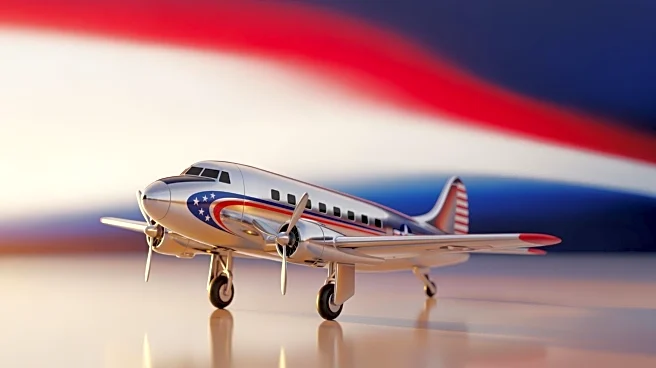
The Freedom Plane, a specially outfitted Boeing 737, has commenced a national tour to celebrate the 250th anniversary of the United States. The tour, organized by the National Archives, began on March 2, 2026, in Washington, DC, and will make its first
stop in Kansas City, Missouri. The plane carries significant historical documents, including the Original Engraving of the Declaration of Independence, the Treaty of Paris, and George Washington's Oath of Allegiance. These documents, typically housed in Washington, DC, are being made accessible to the public across the country. The exhibition will be hosted at various locations, including the National WWI Museum and Memorial in Kansas City, the Atlanta History Center, and the University of Southern California Fisher Museum of Art, among others. The initiative is inspired by the Bicentennial Freedom Train, which toured the country from 1975 to 1976.
Why It's Important?
This tour is significant as it brings foundational documents of American history to the public, fostering a deeper understanding and appreciation of the nation's heritage. By making these documents accessible nationwide, the National Archives aims to engage citizens in a celebration of American history and democracy. The tour also serves as an educational opportunity, allowing people to connect with the country's past in a tangible way. This initiative could enhance national unity and pride, especially during a milestone anniversary. Additionally, it highlights the importance of preserving and sharing historical artifacts, ensuring that the legacy of the nation's founding principles is passed on to future generations.
What's Next?
The Freedom Plane will continue its tour across the United States, with scheduled stops in major cities such as Los Angeles, Houston, Denver, Miami, Dearborn, and Seattle. Each location will host the exhibition for a limited time, allowing local communities to view the documents without an admission fee. The tour is expected to draw significant public interest and participation, potentially influencing future initiatives by the National Archives to make historical documents more accessible. As the tour progresses, it may also prompt discussions on the preservation and interpretation of historical artifacts in contemporary society.