



What's Happening?
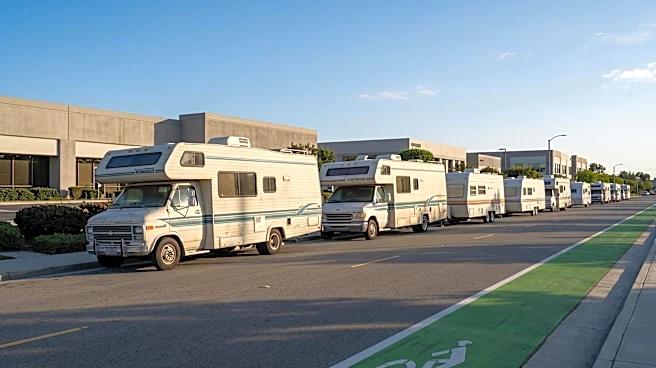
A legal settlement that has protected recreational vehicle (RV) residents in Mountain View, California, by ensuring at least 3 miles of streets with oversized vehicle parking capacity, is set to expire on February 28, 2027. This expiration will remove
the city's obligation to maintain these parking provisions, potentially allowing for stricter enforcement of existing bans on RV parking on 'narrow streets' and streets with bike lanes. The number of inhabited vehicles on Mountain View's streets has increased significantly, from 306 in August 2025 to 438 seven months later, with most being RVs and trailers. This surge is attributed to a regional housing shortage, homelessness crisis, and more restrictive policies in neighboring cities. Businesses and property owners have expressed concerns about the proliferation of RVs, citing issues such as biohazard waste, trespassing, and obstructed sight lines, with some linking RV presence to high commercial vacancy rates and threatening legal action against the city.
Why It's Important?
The impending expiration of the legal settlement poses a significant threat to the housing stability of hundreds of RV residents in Mountain View, many of whom, like Sylvia Garcia Cruz, rely on these vehicles as their primary residence due to the region's severe housing affordability crisis. The potential for increased enforcement of parking bans could displace these residents, exacerbating homelessness and placing further strain on social services. For businesses and property owners, the situation highlights a conflict between economic development and humanitarian concerns. Their complaints about the impact of RVs on safety, property values, and employee comfort underscore the complex challenges faced by communities grappling with housing shortages. The city's efforts to balance the needs of its unhoused population with the concerns of its business community and residents reflect a broader struggle in many U.S. cities to address homelessness effectively while maintaining urban order and economic vitality.
What's Next?
As the settlement expiration approaches, Mountain View city staff are preparing for a transition plan to inform vehicle residents about potential changes. A significant turnover on the City Council, with three new members elected in November, means the future direction of policy regarding oversized vehicles is uncertain. City staff intend to bring plans for new bike lanes, proposed and funded by companies like Intuit and Wisk Aero, to the council for a vote in December. If approved, construction would begin early next year, coinciding with the settlement's expiration, effectively pushing out RVs from additional streets. This could lead to further displacement of RV residents and increased tensions between the city, its residents, and the business community. The city will need to decide whether to adopt additional regulations beyond the existing bans or explore alternative solutions for its unhoused population.
Beyond the Headlines
The situation in Mountain View reflects a deeper societal challenge in the U.S. concerning housing affordability, homelessness, and the right to shelter. The reliance on RVs as housing highlights the extreme measures individuals are taking to cope with exorbitant living costs in areas like Silicon Valley. The conflict between RV residents and businesses, particularly tech companies, underscores the tension between economic prosperity and social equity. The proposal for bike lanes, while seemingly a benign urban improvement, becomes a contentious issue when it serves as a 'pretext for getting rid of the RVs,' as one council member noted. This raises ethical questions about urban planning and development, and whether such initiatives inadvertently marginalize vulnerable populations. The long-term implications could include increased social stratification, further displacement of low-income residents, and a re-evaluation of municipal responsibilities towards its unhoused citizens.