



What's Happening?
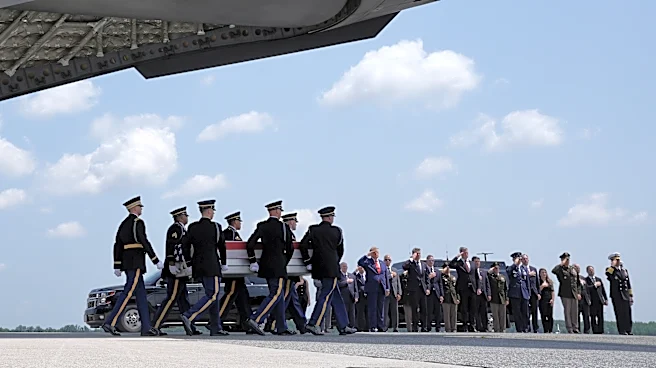
The Pentagon has reclassified casualties from the Iran war as being killed in 'overseas operations,' a move that has sparked criticism from U.S. military veterans who see it as disrespectful to the war dead. This change coincides with President Trump's
warning of a potential return to military action against Iran if diplomatic efforts fail. The reclassification splits the casualty count into two separate campaigns, aligning with the administration's interpretation of the War Powers Act. This decision has been met with backlash from veterans and families of the deceased, who feel it undermines the sacrifices made by service members.
Why It's Important?
The reclassification of war casualties has significant implications for how military operations are perceived and recorded. It raises questions about transparency and accountability in military engagements. The potential resumption of military action against Iran could further strain U.S.-Iran relations and impact global geopolitical stability. The decision also reflects broader issues of how military actions are justified and reported to the public, potentially affecting public trust in government and military institutions.
What's Next?
The Pentagon's decision may lead to increased scrutiny from Congress and veterans' groups, potentially prompting calls for policy reviews or legislative action. President Trump's stance on Iran could influence upcoming diplomatic negotiations and military strategies. The administration may face pressure to clarify its position and ensure that military actions align with legal and ethical standards. The situation could also impact U.S. foreign policy and defense strategies in the Middle East.
Beyond the Headlines
The controversy over casualty reclassification highlights the complexities of modern warfare and the challenges of maintaining transparency and accountability. It raises ethical questions about how military operations are conducted and reported, and the impact on service members and their families. The situation underscores the need for clear communication and policy consistency in military engagements, as well as the importance of honoring the sacrifices of those who serve.